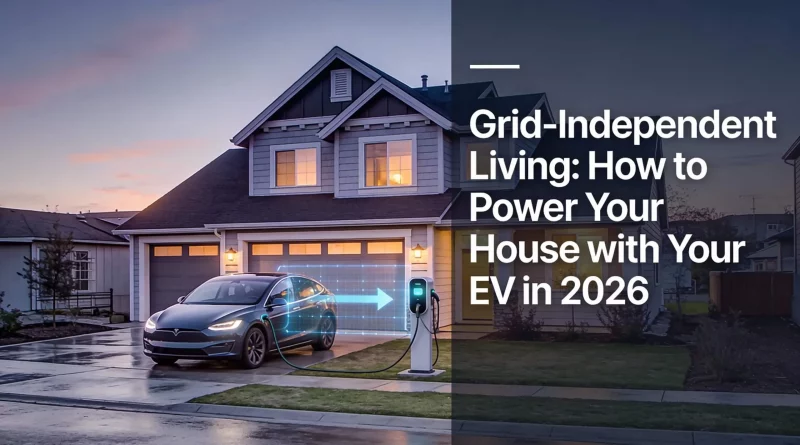
“Grid-Independent” Living: How to Power Your House with Your EV in 2026
TL;DR: Your Car is a Battery
- The Trend: Following the Jan 2026 polar vortex, interest in “Backup Power EVs” surged 400%.
- V2L (Vehicle-to-Load): Standard on Hyundai/Kia. Lets you plug extension cords directly into the car. Good for fridges/lights.
- V2H (Vehicle-to-Home): Standard on Ford/GM. Powers your whole breaker panel but requires a $4,000 gateway installation.
- The Best: The Ford F-150 Lightning remains the king of home backup with its massive 131kWh battery.
In January 2026, extreme winter weather strained the US power grid, leaving millions in the dark. For many, the only lights on the block came from driveways. We are witnessing a fundamental shift in how people view Electric Vehicles. They are no longer just “green transportation”; they are survival tools.
Searchers are pivoting from “0-60 times” to “kWh capacity.” They want to know: Can this car run my furnace? Can it keep my insulin fridge cold? This is the era of “Grid-Independent” living via V2X (Vehicle-to-Everything) technology. Here is how to turn your 2026 EV into a mobile power plant.
Table of Contents
V2L: The “Extension Cord” Solution
Vehicle-to-Load (V2L) is the simplest form of backup power. Cars like the Hyundai Ioniq 5 and Kia EV6 have a standard 120V outlet under the rear seats (and an adapter for the charging port). You can plug in a refrigerator, a lamp, and a coffee maker directly.
Capacity: Usually limited to 1.8kW or 3.6kW. It won’t run your central AC, but it will keep your food from spoiling and your phones charged for weeks. It requires ZERO installation cost.
V2H: Whole-Home Backup
Vehicle-to-Home (V2H) is the big league. This allows your EV to feed power back through your wall charger into your home’s main breaker panel. It disconnects you from the grid (islanding) and powers everything—lights, furnace, well pump.
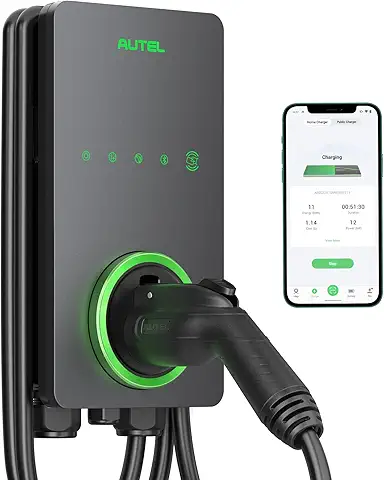
The Catch: You need a specialized Bidirectional Charger (like the Ford Charge Station Pro) and a Home Integration System. In 2026, this hardware costs about $3,000-$5,000 to install. However, compared to a $15,000 Tesla Powerwall setup, using the massive battery already sitting in your truck is a bargain.
Best V2X Cars of 2026
- Ford F-150 Lightning: The heavyweight champion. Its 131 kWh battery can power an average home for 3-10 days.
- Chevy Silverado EV: Offers similar capabilities to the Ford with a massive 200 kWh battery option (WT trim).
- Hyundai Ioniq 5 / Kia EV9: Best for V2L. Perfect for “Glamping” or keeping the fridge running during a short outage.
- Tesla Cybertruck: Powershare enabled. Can output 11.5 kW to backup a home via the Universal Wall Connector.

Does it Ruin the Battery?
This is the #1 question. Using your car to power your house puts “cycles” on the battery, just like driving. However, powering a fridge and lights draws about 1-2 kW per hour. Driving on the highway draws 20-30 kW. In terms of stress, V2H is very gentle on the battery cells. Most manufacturers (Ford/Tesla) fully warranty the battery for V2H use, provided you use certified equipment.