U.S. Bans Chinese Connected Tech: The Digital Iron Curtain Reshaping the Auto Industry
“
Date: February 19, 2026
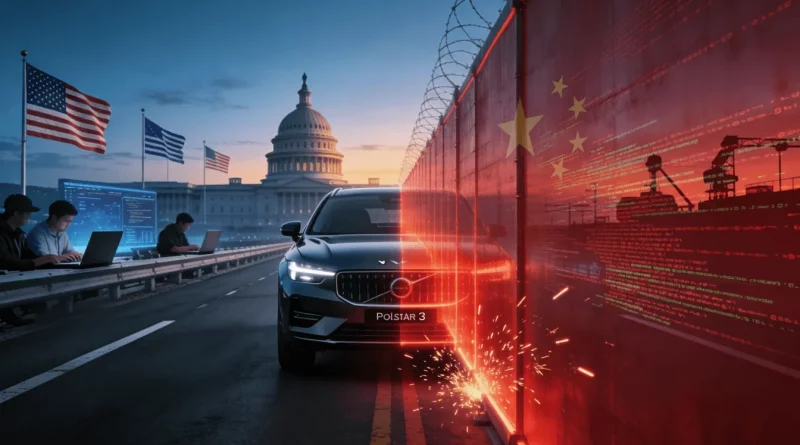
Imagine buying your dream Volvo XC90 or Polestar 3 only to find out its brain the software controlling navigation, cameras, and driver assists is suddenly persona non grata in America. That’s the reality hitting Geely-owned Volvo Cars and Polestar now, as new U.S. rules applying to Model Year 2027 vehicles ban Chinese-origin telematics, connectivity software, and eventually hardware in connected vehicles.
Dubbed a “”digital iron curtain”” by industry insiders, this Commerce Department rule targets Vehicle Connectivity Systems (VCS) like telematics units, Wi-Fi/Bluetooth/cellular modules, and GPS, plus Automated Driving Systems (ADS) software. It forces reshoring of code even for U.S.-built cars if Chinese-sourced. Volvo and Polestar are racing to comply, while Chinese brands like BYD face a total blockade.
The Rule: What’s Banned, When, Why
Official Trigger: Commerce BIS Final Rule (Jan 2025). Instead of a single calendar date, the ban applies to Model Year 2027 for software (vehicles entering production late 2026) and Model Year 2030 for hardware (Jan 1, 2029).
Targeted Tech:
- Software: Telematics, cloud connectivity, GPS, ADAS code “”designed, developed, manufactured, supplied by Chinese entities.””
- Hardware: Antennas, modems, ECUs (2029).
Scope: Passenger vehicles only (trucks/buses later). U.S.-built is OK only if no Chinese tech is present.
Why? National Security: BIS states: “”Malicious access could extract driver data or remotely manipulate vehicles.”” China’s auto telematics dominance (Huawei/Haier) risks backdoors.
Timeline: Phased Rollout
| Phase | Scope | Impact |
|---|---|---|
| Software Ban | MY 2027 (Late 2026) | VCS/ADS code (Chinese nexus); purge code now. |
| Hardware Ban | MY 2030 (Jan 1, 2029) | Connectivity components; full reshore. |
| Legacy Exclusion | Pre-MY 2027 | Existing software grandfathered if no updates. |
OEMs have roughly 12-18 months to audit and replace software stacks before MY 2027 production ramps up.
Protect Your Digital Key
As cars become more connected, digital security is paramount. Prevent relay attacks on your key fob with the TICONN Faraday Box.
Volvo/Polestar: Geely’s U.S. Headache
Polestar: While Polestar warned in late 2024 that the rules could block them, they have pivoted aggressively. The Polestar 3, now built in South Carolina, is undergoing rapid software “”de-sinicization”” to ensure compliance. The risk is less about a total ban and more about costly delays to certify that every line of code is clean.
Volvo: The EX90 (also SC-built) relies heavily on Google and NVIDIA tech, which helps. However, legacy models like the XC60 (using older Geely platforms) face a steeper hill. Volvo is in “”ongoing dialogue”” with Commerce, but mass reshoring of code ($10-50M/model) is the likely path forward.
Chinese Brands: Total Block
BYD, Nio, XPeng, Zeekr: No U.S. entry. Even if they pay the 100% tariff, the software ban effectively kills the car’s brain. The “”Mexico Loophole”” is closed: The BIS “”nexus”” rule catches Chinese software regardless of where the car is assembled.
Winners/Losers Table
| Winner | Why | Loser | Why |
|---|---|---|---|
| U.S. OEMs (GM, Ford) | Level playing field; no Chinese telematics cost edge. | Volvo/Polestar | Reshore chaos, compliance costs. |
| Suppliers (Aptiv, Bosch) | Reshore contracts ($B+). | Geely/BYD | Blocked exports to U.S. |
| Tesla | China software purge hits rivals hard. | Consumers | Telematics choice limited, costs rise. |
Know Your Vehicle’s Code
As software becomes the battlefield, knowing what’s happening under the hood is critical. The BlueDriver OBDII Scan Tool gives you transparency into your vehicle’s systems.
Industry Rush: Audits, Waivers, Workarounds
OEMs are currently auditing millions of lines of code. Huawei’s Telematics Platform, present in 10M+ global cars, is a primary target. Waivers via “”Specific Authorization”” are possible but rare, granted only on a strict model/year basis.
For Volvo, the timeline is tight. While they describe the dialogue as productive, any delay in software certification could push U.S. launches for newer trims. The EX30’s U.S. debut, already complicated by tariffs, now faces this additional software hurdle.
Future: 2027+ Impacts
U.S. EVs: Slower innovation as cheap Chinese ADAS solutions are removed. Reshoring Boom: $5-10B in U.S. software engineering jobs created to rewrite the stacks. China Pivot: Expect Chinese brands to focus heavily on Mexico and SE Asia, where these software rules don’t apply.
Conclusion: The digital iron curtain protects data but slows global auto integration. For Volvo, the race to reshore its code is the most critical battle of 2026.
“