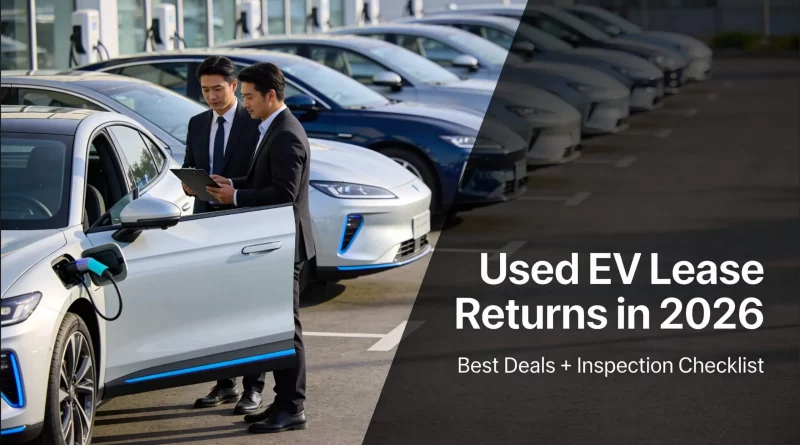
The 2026 Used EV Wave: How to Navigate Lease Returns
The Used EV Market in 2026
- Supply Shock: The record EV sales of 2023 are now 3-year-old lease returns, flooding the market and suppressing used prices significantly.
- The Sweet Spot: 2023 models (Ioniq 5, Mach-E, Model Y) offer the best value/tech ratio. They have fast charging (250kW+) but depreciate like rocks.
- Battery Verify: Never buy without a State of Health (SoH) certificate; mileage is a misleading metric for EVs.
- Tax Credits: The used EV tax credit ($4,000) is still applicable for cars under $25k, and inventory is plentiful in this range.
- Charging: Check if the car comes with a NACS adapter; 2023 models usually have native CCS ports and require the dongle.
In 2023, the automotive world saw a surge in electric vehicle adoption. Manufacturers pushed volume to meet EPA targets, incentives were high, and leasing was the preferred method of entry for many first-time EV buyers who were wary of long-term battery health. Now, in 2026, those three-year leases are up. The result? A “tsunami” of used EVs hitting dealership lots across North America.
Dealership lots are filling up with 2023 model year EVs, creating a “buyer’s market” unlike anything we’ve seen since the 2008 recession. If you’ve been waiting to go electric, 2026 is arguably the best year to do it financially. Depreciation has done the heavy lifting for you, often slashing 40-50% off the original MSRP. A car that cost $55,000 in 2023 is now sitting on a lot for $28,000—or less.
However, buying a used EV is fundamentally different from buying a used gas car. You don’t kick the tires and check the oil; you interrogate the battery management system and inspect the charging port. The engine won’t blow a gasket, but the battery cells might be unbalanced. Here is how to navigate the 2026 lease return wave without getting burned.
Table of Contents
Which Models are Flooding the Market?
To find the best deal, you need to know where the supply surplus is. Based on 2023 sales data, the following models are currently saturating the used market, driving prices down:
- Tesla Model Y (2023): High volume availability. Look for builds after the “Comfort Suspension” update (mid-2023) which improved ride quality significantly. These are abundant and arguably the safest bet for charging infrastructure, as they are native NACS.
- Hyundai Ioniq 5 / Kia EV6: These cars feature excellent 800V charging architecture that still holds up in 2026. They charge faster than almost anything else on the used market (10-80% in 18 mins). Watch out for ICCU (Integrated Charging Control Unit) replacements in the service history; ensure the recall was done.
- Ford Mustang Mach-E: Prices have bottomed out, making them a great bargain. Ensure all high-voltage junction box (HVBJB) recalls have been performed, as 2023 models were still prone to contactor failure.
- Volkswagen ID.4: Software was buggy in 2023. Ensure the 2025/2026 OTA updates have been applied. If the screen is laggy during the test drive, walk away or negotiate a significantly lower price.
The 2026 Used EV Checklist
When inspecting a lease return, focus on EV-specific wear items. Ignore the transmission fluid and timing belts. Use this checklist:
- Tires: EVs are heavy and have instant torque. They eat tires. Lease returns often have tires at the very end of their life (or cheap “LingLong” replacements put on just to pass lease turn-in). Check the brand and tread depth. Negotiate a new set of EV-specific tires (like Michelin Pilot Sport EV or Hankook iON) if they are worn.
- Charging Port: This is a mechanical wear point. Check for wiggle or cracks in the CCS/NACS port plastics. A loose port can cause charging to stop intermittently or cause overheating. It is an expensive fix ($800+) out of warranty.
- Undercarriage: Look for dents in the battery shield. A scraped bottom can void the battery warranty. Get the car on a lift if possible, or use a mirror. If the metal plate protecting the battery is punctured or deeply gouged, do not buy the car.
- Cabin Filter/Smell: Lease returns are often returned dirty. EVs lack engine smells, so mildew or pet odors are more noticeable. Check the frunk for moisture accumulation.
- Accessories: Ensure the mobile charging cable (if originally included) is present. Many lease returns strip these out to sell separately on eBay. A replacement is $200-$300.

Battery Health vs. Mileage
In 2026, mileage matters less than “Cycles” and “State of Health” (SoH). A car with 50,000 highway miles might have a healthier battery than a city car with 20,000 miles that was constantly DC fast-charged to 100%.
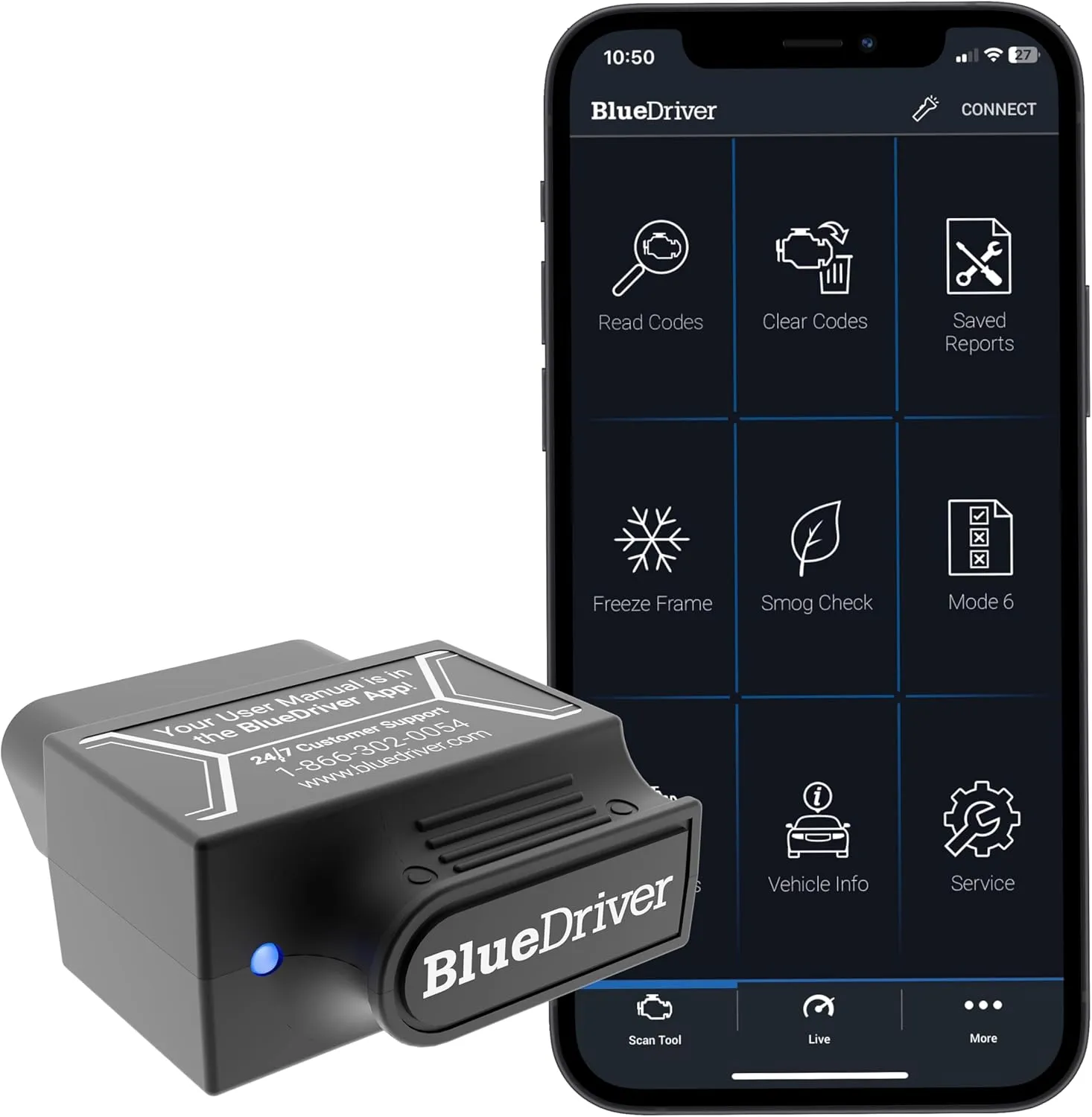
You need to verify the battery health. Most dashboard “range estimators” are unreliable because they adjust based on recent driving habits. If the previous owner drove aggressively, the range will look low, even if the battery is healthy. You need hard data.
LFP vs. NMC: Which Used Battery is Better?
When buying a 2023 EV, you need to know the chemistry.
- LFP (Lithium Iron Phosphate): Found in Tesla Model 3 RWD and some Ford Mach-Es. These batteries are heavier and have slightly less range, BUT they last 2-3x longer and can be charged to 100% daily without degradation. If you find a used LFP car, high mileage is less of a concern.
- NMC (Nickel Manganese Cobalt): Found in Long Range Teslas, Ioniq 5, and VW ID.4. These have higher energy density (more range) but degrade faster if charged to 100% frequently. If buying an NMC car, check the charge history carefully.
Navigating the Tax Credit (IRS 25E)
The Used EV Tax Credit (Section 25E) is a huge driver for the 2026 market. Here are the current rules you need to know to save $4,000:
- Price Cap: The vehicle must sell for $25,000 or less. Dealers know this, so you will see many cars listed at $24,999.
- Model Year: It must be at least 2 years old (so 2024 models and older are eligible in 2026).
- Income Limits: Your modified adjusted gross income (AGI) must not exceed $75k for single filers or $150k for joint filers.
- Transferability: In 2026, you can transfer the credit to the dealer at the point of sale. This is a game-changer. It means you get the $4,000 discount immediately off the purchase price, rather than waiting for tax season. This effectively makes a $24,000 EV cost $20,000 out the door.
Recommended Next Reads
- Battery Health Certificate (2026): What It Is
- EV Charging in 2026: Home vs Fast Charging
- Buying an Ex-Hertz Rental: Risk vs Reward