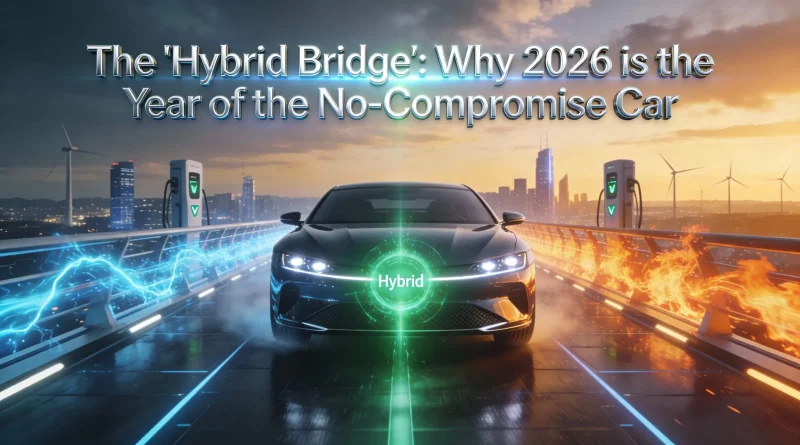
The “Hybrid Bridge”: Why 2026 is the Year of the No-Compromise Car
The 2026 Hybrid Boom
- The Shift: Buyers are pivoting from full EVs to hybrids due to persistent charging infrastructure gaps in rural areas and rising electricity rates.
- The Winner: Plug-in Hybrids (PHEVs) offering 50+ miles of electric range have become the industry’s “Golden Mean.”
- Resale Value: Hybrids are currently holding value 15% better than pure EVs in the 2026 used market.
- Top Picks: The 2026 Toyota Prius Prime and Honda CR-V Hybrid are the sales leaders.
- Tax Credit: While standard hybrids don’t qualify, many PHEVs still get partial credits ($3,750).
If you walked into a car dealership in early 2026 expecting to see nothing but electric vehicles, you were likely surprised to find the lot full of gasoline engines—but not the gas guzzlers of the past. While the electric vehicle (EV) revolution is inevitable, the timeline has shifted. The “Hybrid Bridge” is no longer just a transition phase; it has become a destination for millions of American drivers.
With federal incentives for EVs tightening under new budget rules and public charging infrastructure still facing reliability hurdles (despite the NACS rollout), the “No Compromise” car has emerged as the dominant trend of the year. Drivers want the instant torque and silence of an electric motor for their commute, but they demand the unlimited range of a gas engine for their holiday road trips. In this comprehensive guide, we analyze why 2026 is the year of the Hybrid, the financial realities of owning one versus an EV, and how to choose the right model for your lifestyle.
Table of Contents
HEV vs. PHEV: What is the Difference in 2026?
The terminology hasn’t changed, but the capabilities have. In 2026, the technological gap between a standard Hybrid (HEV) and a Plug-in Hybrid (PHEV) has widened significantly, creating two distinct classes of vehicles for two different types of drivers. Understanding this difference is critical to making the right purchase.
1. Standard Hybrid (HEV): The “Fill and Go”
Think of the classic Toyota Prius, but refined to perfection. You never plug it in. It captures energy from braking (regenerative braking) and uses it to charge a small battery (usually around 1-2 kWh). This battery assists the gas engine during acceleration and allows for short bursts of electric-only driving at low speeds.
2026 Status: These systems are now incredibly efficient. A 2026 Toyota Camry Hybrid effectively gets 55+ MPG without any driver behavior change. They are lighter than EVs because they don’t carry massive batteries, and they are significantly cheaper to buy upfront. For apartment dwellers without access to charging, the HEV remains the king of efficiency. The engines are now quieter, engaging less frequently, and the “drone” of the CVT transmission has been largely tuned out by better sound insulation.
2. Plug-in Hybrid (PHEV): The “Best of Both Worlds”
This is the true “Hybrid Bridge.” These cars have larger batteries (typically 15-25 kWh) that you can plug in to get 40-60 miles of pure electric driving. Once the battery is depleted, the gas engine turns on seamlessly, transforming the car into a standard hybrid.
2026 Status: This is where the innovation is exploding. Manufacturers like Chrysler and Jeep have pushed PHEV range to near 50 miles on their SUVs. For 90% of Americans, this covers the daily commute on electricity alone, effectively making the car an EV Monday through Friday, and a gas car on the weekend. The 2026 Toyota Prius Prime, for example, now offers enough electric range to handle a round-trip commute from the suburbs to the city center without burning a drop of gasoline.
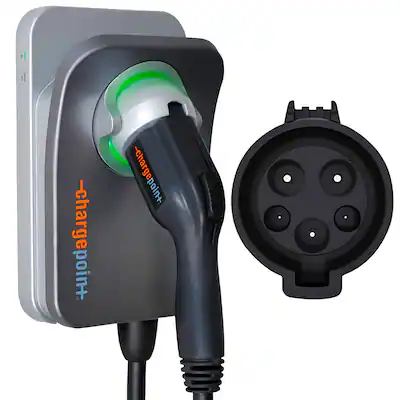
Cost Analysis: Hybrid vs. EV Ownership
In 2026, the math regarding vehicle ownership has shifted. While EVs are cheaper to “fuel” (electricity is generally cheaper than gas), they are often more expensive to insure and repair due to the specialized labor required and the high cost of battery packs. Hybrids sit in the financial sweet spot. Let’s break down the 5-year ownership costs of a typical mid-size SUV.
| Expense (5 Year Projection) | 2026 EV (e.g., Tesla Model Y) | 2026 Hybrid (e.g., Honda CR-V) |
|---|---|---|
| Purchase Price (MSRP) | $42,000 | $36,500 |
| Fuel/Electricity Cost | $3,500 (Home Charging) | $5,800 (Gas @ $3.50/gal) |
| Insurance Premiums | $11,000 | $7,500 |
| Tire Replacement | $1,200 (Heavier/Higher Torque) | $800 |
| Resale Value (Retained) | 45% ($18,900) | 60% ($21,900) |
| Total Cost of Ownership | $38,800 | $28,700 |
The Verdict: Unless you drive over 20,000 miles a year (where the fuel savings of an EV really compound), the Hybrid is often the cheaper vehicle to own over a 5-year cycle in 2026. This is primarily due to lower insurance premiums (EVs are more expensive to repair after accidents) and better resale value retention, as the used market for hybrids is incredibly robust.
The Best Hybrids of 2026
The market is flooded with options, but two distinct systems dominate the landscape: The Toyota Synergy Drive and the Honda Two-Motor Hybrid system. Understanding the difference helps you pick the drive feel you prefer.
Toyota Prius Prime & Camry Hybrid
Toyota continues to refine its planetary gear-set hybrid system. It is bulletproof. The 2026 Toyota Prius Prime is the standout. It offers a solar roof option that can add 3-4 miles of range per day just by parking outside. It is no longer the “slow car” of the past; with over 220 horsepower, it hits 0-60 in under 7 seconds, making it genuinely fun to drive. The tech interface, once a weak point for Toyota, has been overhauled with a faster, crisper UI in 2026.
Honda CR-V Hybrid
Honda takes a different approach. In the Honda CR-V Hybrid, the gas engine acts primarily as a generator to power the electric motor, only connecting to the wheels mechanically at highway speeds via a lock-up clutch. This gives the CR-V a much more “EV-like” feel around town—smooth, linear acceleration without the “rubber band” feeling of a traditional CVT transmission. It feels punchier at stoplights.
Maintenance Realities: The “Double Trouble” Myth
A common myth that persists in 2026 is that hybrids are “double the trouble” because they have an internal combustion engine (ICE) and an electric motor. Skeptics argue there are twice as many things to break. In reality, hybrids are often statistically more reliable than standard gas cars.
- Brakes: Because of regenerative braking (using the motor to slow the car), the physical brake pads on a hybrid often last 100,000 miles or more. You essentially get free brake jobs for the life of the car.
- Engine Wear: The electric motor takes the strain off the gas engine during stop-and-go traffic—the most damaging time for an engine. This means the engine runs fewer hours for the same number of miles driven, keeping the oil cleaner and the rings tighter.
- Transmission: Toyota’s e-CVT has no belts or chains to break; it is a simple set of gears that rarely fails. It is mechanically simpler than a 10-speed automatic found in many gas SUVs.
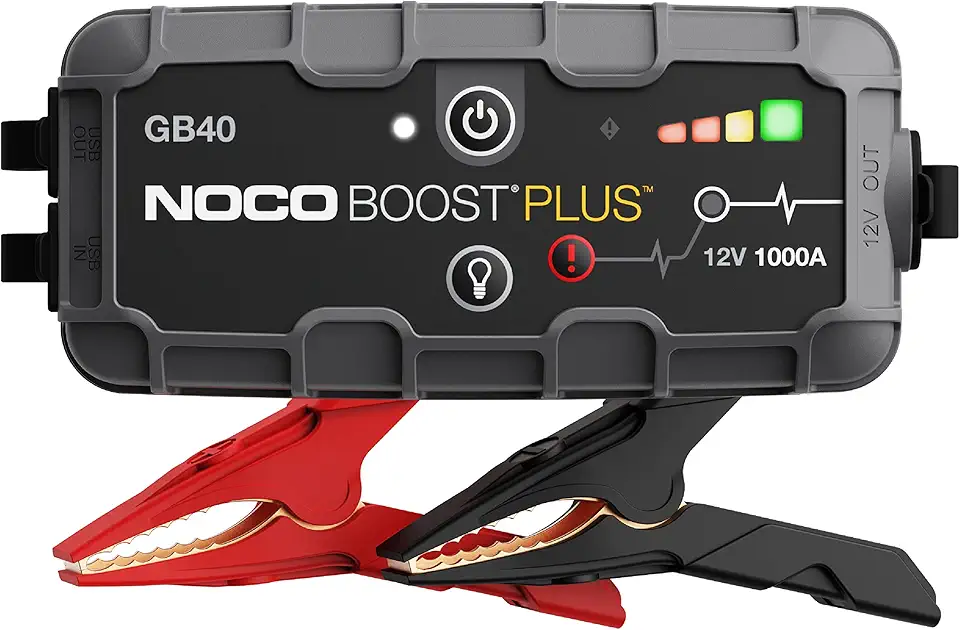
However, you do still have oil changes. And if you are buying a used hybrid, checking the health of the 12V auxiliary battery (which boots the computer) and the high-voltage hybrid battery is essential. While failures are rare before 150,000 miles, they are expensive ($3,000+) when they happen.
The Resale Value Equation
Perhaps the most compelling reason to buy a hybrid in 2026 is resale value. The used market has spoken: people want hybrids. While used EV prices have been volatile (crashing in 2024, stabilizing in 2025), hybrid values have remained remarkably steady.
A 3-year-old RAV4 Hybrid often sells for 75% of its original value. Compare that to many EVs which are trading at 50% of their original value. If you plan to upgrade your car in 3-4 years, the hybrid is the safer place to park your money while the EV market continues to mature and standardize on NACS charging and solid-state batteries.