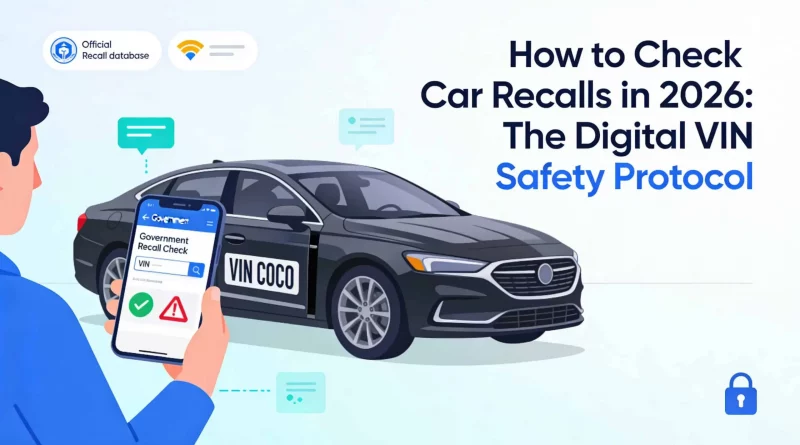
How to Check Car Recalls in 2026: The Digital VIN Safety Protocol
As vehicles transition into high-performance computers on wheels, the nature of automotive safety has shifted. In 2026, a ‘recall’ is as likely to be a software bug as it is a mechanical failure. Driving a vehicle with an open safety recall puts you, your passengers, and other road users at risk. With over 50 million vehicles currently having open recalls, the 2026 Digital VIN Protocol is a vital skill. This 700-word guide provides the fool-proof steps to ensuring your vehicle is up to date.
Step 1: Locate Your 17-Digit Digital VIN
Your Vehicle Identification Number (VIN) is your car’s unique DNA. While it has always been present on the driver’s side dashboard and the door jamb sticker, 2026 models now include a ‘Digital VIN’ within the vehicle’s infotainment system under the ‘About Vehicle’ tab. We recommend cross-referencing the digital VIN with the physical VIN on the door jamb to ensure no software tampering has occurred. This 17-character string contains everything from the manufacturing plant location to the specific battery chemistry used in your car, making it the only reliable way to check for recalls.
Step 2: The NHTSA and ‘Check to Protect’ Query
Once you have your VIN, visit NHTSA.gov/Recalls. In 2026, these databases are updated in real-time. Simply enter the 17 characters to see a list of ‘Open’ vs. ‘Closed’ recalls. An ‘Open’ recall means the safety issue has not yet been addressed. In 2026, pay close attention to the ‘Remedy Available’ status. If a recall is listed but the remedy is ‘Not Yet Available,’ you should contact your manufacturer immediately for interim safety instructions, such as limiting charging to 80% or parking away from structures.
Step 3: Verifying Over-The-Air (OTA) Repairs
The biggest change in 2026 is the Software Recall. Many safety issues are now fixed via Over-The-Air updates. However, simply receiving an update does not mean the recall is closed. To verify an OTA repair, you must check your car’s ‘System Update History.’ Look for a specific patch ID that matches the NHTSA recall notice (e.g., ‘Safety Patch 2026.4.1’). If the update failed to install, the recall remains ‘Open’ and your vehicle is unsafe. In such cases, a physical visit to a dealership is mandatory to have the firmware manually flashed by a technician.
Step 4: The Dealer’s Federal Responsibility
Recalls never expire and must be performed free of charge at an authorized dealership. In 2026, many manufacturers offer ‘Mobile Service’ for software-related recalls that cannot be fixed via OTA, where a technician will come to your home. If a repair requires the vehicle to stay for more than 24 hours, many 2026 programs now mandate a loaner vehicle or transport credits. By checking your VIN every six months, you turn automotive safety from a game of chance into a managed digital protocol.