Dodge Charger SIXPACK R/T: Hurricane I-6 Brings Gas Muscle Back to Center Stage
By InnoGazette Editorial Team | March 17, 2026
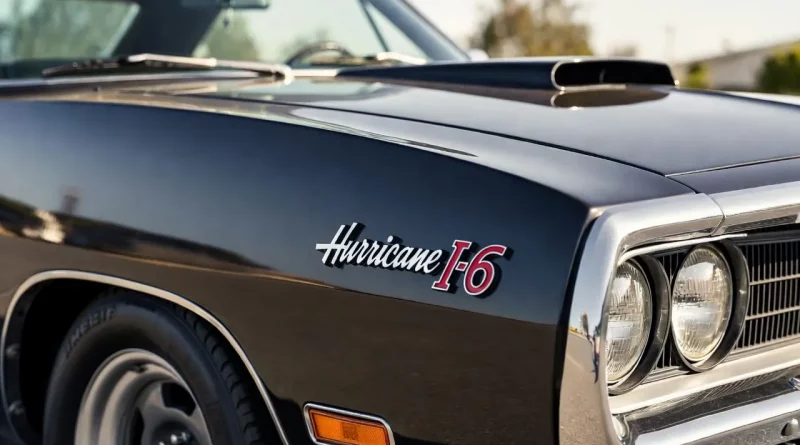
Dodge has done what many thought it wouldn’t: it has brought a gasoline?powered Charger back to the heart of its lineup—and not with a V8, but with a twin?turbo 3.0?liter inline?six. Branded SIXPACK, the new Hurricane?based straight?six powers the 2026 Dodge Charger R/T with 420 hp and 468 lb?ft of torque, delivering the highest entry?level horsepower of any current muscle car while marking a strategic pivot away from both Hemi V8s and an EV?only future.
What Dodge launched around March 8–9, 2026, is more than just another trim: the Charger R/T Sixpack S.O. completes a “multi?energy” Charger family alongside the higher?output Scat Pack Sixpack H.O. and battery?electric Daytona variants. For a brand built on V8 lore, the R/T’s return as a gas?fueled, all?wheel?drive coupe and sedan is a loud, calculated statement.
1. SIXPACK: The Hurricane I?6, Rebranded and Retuned
1.1 From Hurricane to SIXPACK
Stellantis’ Hurricane twin?turbo 3.0?liter inline?six has been rolling out across the Ram 1500 and Jeep Wagoneer families for over a year. For Dodge, the engine receives a new badge—SIXPACK—and a Charger?specific calibration.
Two versions sit under the Charger’s long hood:
- SIXPACK Standard?Output (S.O.) – Charger R/T: 3.0L twin?turbo inline?six, 420 hp, 468 lb?ft, 22 psi peak boost, cast?aluminum pistons, 10.4:1 compression.
- SIXPACK High?Output (H.O.) – Charger Scat Pack: 3.0L twin?turbo inline?six, 550 hp, 531 lb?ft, 30 psi peak boost, forged pistons, steel crankshaft, 9.5:1 compression, twin 54 mm Garrett GT2054 turbos.
Dodge’s official SIXPACK page describes the engine as “new and bound to be notorious,” emphasizing its twin counter?rotating turbos, engine?mounted intercooler, and high?pressure direct injection at 350 bar. The branding deliberately echoes the classic “Six Pack” triple?carb big?blocks of the muscle?car era—but with six cylinders and six injectors instead of six barrels.
1.2 Power and efficiency vs the outgoing V8
The R/T’s 420 hp may look modest next to the Scat Pack’s 550 hp, but it outguns many past Chargers and current rivals:
- Dodge notes that 420 hp is the highest entry?level output of any current muscle car, topping base Mustang and Camaro equivalents.
- The S.O. engine’s 468 lb?ft arrives early (full torque by ~2,500 rpm) and stays strong across the mid?range, aided by 22 psi of boost.
- EPA estimates for the Charger R/T stand at roughly 17/26/20 mpg city/highway/combined, approximately 1 mpg better in each category than the Sixpack H.O. Scat Pack, and a significant improvement over the outgoing 5.7L Hemi.
For Dodge’s “Never Lift” horsepower ethos, the Hurricane?derived SIXPACK offers a way to increase performance and improve efficiency without returning to a legacy V8.
Maximize Your Horsepower
Modern turbo engines demand clean fuel systems. Keep your twin-turbo Hurricane running at peak performance with BG 44K Platinum.

2. 2026 Charger R/T Sixpack: Key Specs and Performance
2.1 Powertrain and driveline
Dodge’s press materials and early first drives paint a consistent picture:
- Engine: 3.0L twin?turbo SIXPACK S.O. inline?six (Hurricane?based)
- Output: 420 hp @ ~5,800–6,000 rpm, 468 lb?ft from ~2,500 rpm
- Transmission: ZF?sourced 8?speed automatic, with paddle shifters and performance programming
- Driveline: Standard all?wheel drive with on?demand 100% rear?wheel?drive mode at the push of a button
Drive modes dictate torque split: Normal (up to 40/60 front/rear), Snow/Wet (fixed 50/50), and Sport (up to 30/70 front/rear, plus selectable full RWD). Quarter?mile and acceleration claims from Dodge: 0–60 mph in 4.6 seconds (R/T) and 12.9 seconds for the quarter?mile.
Those numbers place the R/T comfortably ahead of many historic Charger variants, despite being the “entry” gas model.
2.2 Chassis, brakes, and dynamics
While detailed suspension specs vary by package, the overarching architecture includes a new STLA Large–based platform, independent front and rear suspension, performance brakes, and optional adaptive dampers. MotorTrend’s first drive notes that the Charger R/T’s chassis feels “familiar to those who have driven the Scat Pack”, with slightly softer tuning but retains the quicker turn?in and composure delivered by the new architecture and AWD system.
2.3 Sound and character
One of the biggest questions: can a twin?turbo six sound like a Dodge? Reviewers highlight a deliberate aggressive throttle tip?in to mask low?rpm turbo lag, a “snort” and “modern muscle bark” from the performance?tuned exhaust, and a soundtrack that is angrier and more mechanical than many other inline?sixes.
Some tests note that the “brain still expects a V8” when you look out over the Charger’s long hood, but concede that the Hurricane I?6 is a highlight in every Stellantis product in which it appears—and that remains true in the Charger R/T.
3. Design and Packaging: Muscle Car, Modern Platform
The 2026 Charger lineup shares a new body that reinterprets classic Charger cues. Key points for the R/T Sixpack S.O.:
- Body styles: Two?door coupe and four?door sedan, with the four?door carrying a $2,000 MSRP premium.
- Styling: Wide, low stance with reinterpretations of the iconic Charger front fascia and shoulder line.
- Interior: A modern cockpit with digital cluster, large central infotainment screen, performance pages, and available performance seats.
Dodge emphasizes that the aesthetic continuity with past Chargers was intentional: despite the platform change, electrification, and loss of the V8, the car had to look like a Charger—big, bold, and unapologetically American.
Keep the Cockpit Clean
Whether you’re in a coupe or sedan, keep your interior looking fresh. The ThisWorx Car Vacuum Cleaner handles crumbs and dust with ease.

4. Strategy: A Pivot Back to Gas—But Not Backward
4.1 “Multi?energy” Charger: gas and EV, not EV only
Dodge had telegraphed a “multi?energy” Charger strategy in earlier reveals. The formal launch of the gas?powered Charger R/T Sixpack crystallizes that approach: Gas isn’t dead, no V8 in Charger, and entry?level power redefined with 420 hp and AWD standard.
In its March 8 press release, Dodge frames the R/T explicitly as expanding its “multi?energy lineup” and “continuing its mission to deliver horsepower and torque” while outperforming the previous generation.
4.2 Why a high?output gas six makes sense now
Dodge and Stellantis are operating in a context where EV demand growth has slowed. The Charger R/T Sixpack S.O. is both a product decision and a signaling device: Dodge is offering a modern compromise—downsized, turbocharged, efficient, but still raw enough to feel like a Dodge.
5. Competitive Landscape: Entry?Level Muscle, Redefined
5.1 Where 420 hp entry?level stands versus rivals
Dodge claims that the Charger R/T Sixpack’s 420 hp is the highest output currently available in a base?trim muscle car, topping base Mustang and Camaro equivalents. This position allows Dodge to continue its “horsepower dominance” marketing narrative without leaning on ever?larger V8s.
5.2 AWD and four?door availability as differentiators
The Charger R/T’s standard AWD with selectable 100% RWD and the availability of a four?door body give Dodge something neither Mustang nor any future Camaro replacement currently offers. This gives the Charger R/T a dual identity: family hauler and performance coupe.
6. Early Reviews: Does the Charger R/T Sixpack Deliver?
First drives from outlets like Car and Driver and MotorTrend converge on several themes: The Hurricane/SIXPACK I?6 is consistently described as the “bright spot” of the package—strong, smooth, and eager once boost builds. The R/T is “half a second behind the Scat Pack” to 60 mph but still “decisively quick.”
Conclusion: A New Era of Gas Muscle—With Six, Not Eight
The 2026 Dodge Charger R/T Sixpack is not just another trim level; it is the structural cornerstone of Dodge’s gas?powered future. By centering the gas Charger lineup on the 3.0L twin?turbo SIXPACK I?6, delivering 420 hp, 468 lb?ft, standard AWD, and 4.6?second 0–60 runs, Dodge is making a clear strategic statement.
Gasoline performance remains central to the brand’s identity. The path forward is high?output, high?efficiency inline?six power, not ever?larger V8s. Multi?energy Chargers—EV and ICE—will coexist, giving customers a choice between electric “Banshee” power and turbocharged combustion muscle.