China’s EV Tariff Shift & The Cupra Deal: How Price Undertakings Are Stopping a Trade War
Date: February 17, 2026
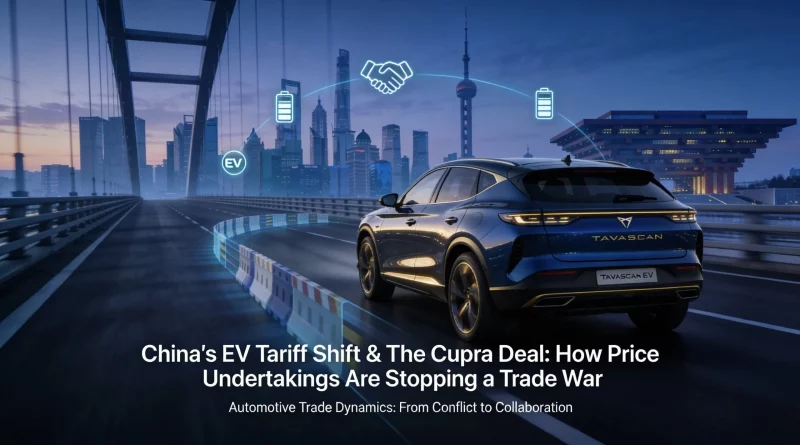
China’s shift does not repeal EU tariffs, but it opens a political and legal pressure valve that could stop the EV trade fight with Europe from escalating into a full-blown trade war. Beijing is now explicitly telling Chinese EV makers they may negotiate individual “price undertakings” with Brussels—minimum price and volume commitments on specific models—following Volkswagen‘s Cupra Tavascan deal, which became the first China-built EV to dodge the new EU countervailing duties.
Background: How the EU-China EV Tariff Fight Started
In October 2024, the European Commission concluded its anti-subsidy investigation into battery electric vehicles (BEVs) imported from China. It found that state support for production and exports in China was significant enough to justify definitive countervailing duties ranging from 7.8% to 35.3% on BEV imports.
The decision hit:
- Chinese brands like BYD, SAIC (MG), Geely/Zeekr, NIO, XPeng.
- Western brands building cars in China, including Tesla and Volkswagen group models such as the Cupra Tavascan.
For a China-built EV with, say, a 20-25% margin, an extra duty in the 20-30% range is enough to wipe out profitability, force a steep retail price increase in Europe, or make the model unviable for the EU market altogether.
From Beijing’s perspective, the investigation and tariffs looked like a strategic attempt to slow China’s rapidly growing EV exports and protect EU industry. From Brussels’ standpoint, the tariffs were framed as necessary to counter unfair subsidies and protect European jobs and investment in local EV production.
The Cupra Tavascan Deal: A New Legal Escape Route
The inflection point came in early February 2026. On 10 February 2026, the European Commission announced it had accepted a “price undertaking” from Volkswagen (Anhui) Automotive Co. Ltd. and its EU partner SEAT S.A. for the Cupra Tavascan, an all-electric SUV coupe built in Anhui, China.
Key elements of the deal, based on the Commission and trade-press summaries:
- Minimum import price: VW Anhui commits to export the Cupra Tavascan to the EU at or above an agreed price floor.
- Annual volume quota: The model is also subject to volume limits—a maximum number of Tavascan units per year—so that it doesn’t flood the market.
- Tariff exemption: As long as VW respects the minimum price and quota, the Tavascan is exempt from the countervailing duties that apply to other China-built BEVs.
- Investment commitments: SEAT and VW also pledged additional EV-related investments within the EU, which the Commission considered part of the overall package.
Crucially, this was the first case in which a China-built electric vehicle gained such an exemption. The Commission framed the decision as WTO-compatible, non-injurious to EU industry, and a concrete example of its January 2026 “guidance document” explaining how Chinese BEV exporters could submit “undertaking” offers instead of just paying tariffs.
Ready for Your New EV?
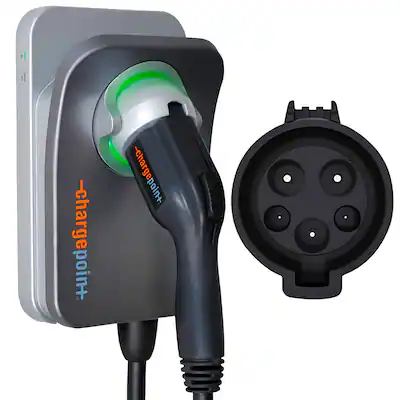
Whether it’s a Cupra Tavascan or a Tesla Model Y, ensure you have reliable home charging. The ChargePoint Home Flex is the top-rated choice for flexible, fast charging.
Beijing’s Tactical Shift: From Collective Front to Case-by-Case Deals
Initially, Beijing and Chinese industry groups wanted a collective solution—a broad EU-China understanding covering multiple Chinese EV makers in one package. The Cupra deal undermined that preference.
Following the Commission’s decision, a spokesperson for China’s Ministry of Commerce, He Yadong, confirmed at a regular press conference on 12 February 2026 that Beijing would now support a more flexible approach: China is “ready to maintain dialogue and communication” with the EU, and both sides “encourage Chinese EV manufacturers to effectively utilize price commitments.”
In other words: Before, China pushed for one big, coordinated solution. Now, it accepts and even encourages individual undertakings between specific EV makers and Brussels, as long as Chinese firms get “fair treatment” and not just European brands like Volkswagen‘s Cupra. That is the softening of Beijing’s stance: a move from opposition to one-off deals to explicit approval of case-by-case negotiation.
How the “Price Commitment” Mechanism Works in Practice
The underlying legal and policy framework looks like this:
- EU anti-subsidy decision (2024): Imposed definitive countervailing duties (7.8-35.3%) on BEVs imported from China.
- Guidance on undertakings (Jan 2026): The Commission issued a guidance document detailing how Chinese BEV exporters can propose “price undertaking” offers: price floors, volume limits, and possibly EU investment commitments, as WTO-compatible alternatives to the duties.
- VW Anhui / Cupra Tavascan case (Feb 2026): VW Anhui submitted an offer in October 2025; after review, the Commission accepted it. Tavascan is exempt from countervailing duties, as long as it meets the agreed minimum import price and quota.
- Door opens for others: Reuters and other outlets report that Chinese EV makers such as BYD, Geely, and SAIC are now preparing to explore similar deals, potentially model by model.
From a manufacturer’s perspective, the trade-off is Pros (No extra duties, predictable access) vs Cons (Less pricing freedom, limited volume).
Why This Matters: De-Escalation, Not Surrender
This does not mean the EU’s China BEV tariffs are gone, nor that the broader geo-economic tension has evaporated. But it does create a structured off-ramp for some of the most contentious elements of the dispute.
For the EU
It keeps trade defence instruments intact and still signals that subsidized undercutting is unacceptable. It avoids immediately cutting off certain affordable EVs that help EU meet climate goals and can leverage undertakings to attract EV investment into Europe, as seen in the Cupra case where SEAT/VW tied projects in the EU into the deal.
For China
It preserves a continued channel for China-built EV exports, albeit at higher “floor” prices, instead of facing a de facto shut-out. It lets Chinese makers respond flexibly: some may pay duties, some may shift to EU production, others may propose undertakings.
For Global Automakers
VW’s success shows non-Chinese OEMs building in China have a viable legal route to keep certain China-made models in the EU without prohibitive duties. Chinese brands see a template: with minimum price and quotas, they might retain a foothold in Europe rather than being forced out entirely.
Protect Your Investment
Whether you’re driving a new EV or a classic, keeping your exterior pristine is key to resale value. The Chemical Guys Arsenal Builder Kit has everything you need.

Brand-Specific Outlook: What This Means for Key Players in Europe
BYD
Opportunity: China’s green light to individual deals opens door for Dolphin, Atto 3, Seal. BYD can propose price floors ~€25k on Seagull/Dolphin + Hungary plant investment to dodge 17-38% duties. Challenge: EU scrutiny on subsidies may demand steep floors. Likely Path: Negotiate 2-3 models for 2027 EU foothold.
Geely / Zeekr / Polestar
Opportunity: Zeekr 001 premium (€45k+); easier floor. Polestar EU base aids. Challenge: Volume models like Geometry face 25%+ duties. Likely Path: Zeekr undertakes (€40k floor).
Tesla
Opportunity: Model 3/Y Shanghai-built; negotiate as VW did (min €35k?). Challenge: Musk’s anti-subsidy stance may slow talks. Likely Path: Accept duties short-term (10-20% hit), ramp Berlin Gigafactory. Minimal urgency vs. Chinese brands.
Volkswagen Group (Cupra, etc.)
Opportunity: Cupra Tavascan precedent saves model; template for ID.4 Buzz China-built. Challenge: EU politics—critics call it “loophole for Germans.” Likely Path: Expand to 3-4 models; VW Anhui invests €2B EU.
Strategic Takeaway
China’s willingness to let EV makers like BYD, Geely or SAIC follow Volkswagen‘s Cupra and negotiate individual price commitments represents a pragmatic, tactical shift. It accepts the EU’s framework instead of trying to blow it up, and signals that Beijing would rather manage the conflict through rules and deals than slide into a tit-for-tat tariff war that spills into other sectors.