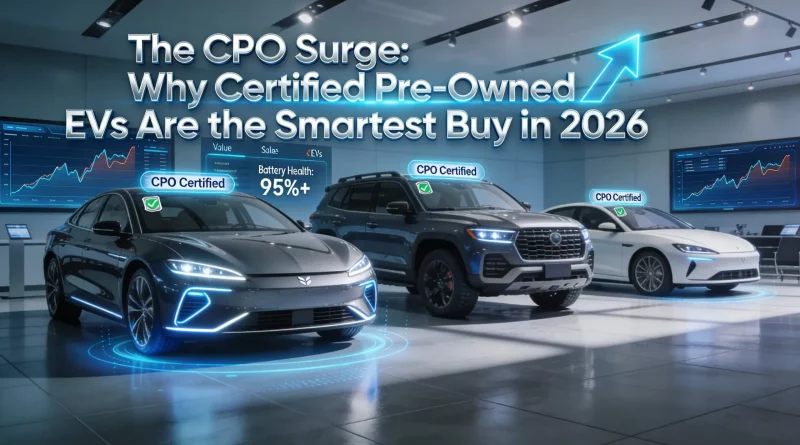
The CPO Surge: Why Certified Pre-Owned EVs Are the Smartest Buy in 2026
The CPO Advantage
- The Sweet Spot: 2023/2024 off-lease EVs are flooding dealers, but only the best get “Certified.”
- Warranty Reset: Many CPO programs (like Hyundai) reinstate the 10-year/100k powertrain warranty for the second owner.
- Peace of Mind: CPO requires a rigorous battery health check that standard used cars don’t get.
- Financing: CPO cars often qualify for new-car interest rates, saving thousands over a standard used loan.
Buying a used car is always a gamble. Buying a used electric car feels like a bigger one because of the battery. Enter the “CPO” (Certified Pre-Owned) program. In 2026, with millions of lease returns hitting the market from the 2023 EV boom, CPO has become the golden ticket for smart buyers who want to avoid the steep depreciation curve of a new car but fear the maintenance costs of a used one.
Unlike a standard used car found on Craigslist or a generic lot, a CPO vehicle is sold by a franchised dealer (e.g., a Ford dealer selling a used Mach-E). It must pass a manufacturer-backed inspection, and critically, it comes with an extended warranty that often rivals a new car.
Table of Contents
Comparing CPO Programs: Who Has the Best Warranty?
Not all CPO stickers are created equal. In 2026, here are the leaders in the CPO space:
- Hyundai / Kia: The undisputed kings. Kia and Hyundai CPO programs reinstate the legendary 10-year/100,000-mile powertrain/battery warranty, which usually disappears for second owners. Buying a CPO Ioniq 5 effectively gives you a better warranty than a new Ford.
- Ford (Blue Advantage): Offers a comprehensive 12-month/12,000-mile bumper-to-bumper warranty on top of the remaining factory warranty. Great for peace of mind on Mustang Mach-E electronics, which were prone to glitches in early model years.
- Tesla: Tesla’s used program adds 1 year / 10,000 miles to the Basic Vehicle Limited Warranty. It’s decent, but less generous than the Koreans, and Tesla does not inspect the cars as rigorously cosmetically (expect some rim rash).
The Battery Health Requirement
To be “Certified,” an EV must meet strict State of Health (SoH) metrics. For most brands in 2026, the battery must show at least 90% capacity retention. If a lease return comes in with 85% health because the previous owner abused it with daily Supercharging to 100%, the dealer cannot sell it as CPO. They must wholesale it to a generic lot.
This is why CPO is worth the extra $1,500. You are paying for the guarantee that you aren’t buying a degraded battery. You essentially get a “cherry-picked” used car.
The Interest Rate Loophole
Used car interest rates in 2026 are hovering around 9-10% for buyers with good credit. However, automakers use CPO financing as a marketing tool. It is common to see “2.9% APR for 60 months” on CPO models. On a $30,000 loan, the difference between 2.9% and 9.9% is nearly $6,000 in interest over the life of the loan. This often makes a more expensive CPO car cheaper in the long run than a cheaper non-CPO car bought from Joe down the street.
CPO and the Tax Credit
Good news: CPO vehicles sold by dealers are fully eligible for the $4,000 Used EV Tax Credit (IRS Section 25E), provided the sale price is under $25,000. Dealers know this limit well. In 2026, you will see thousands of CPO Chevy Bolt and Nissan Leaf models priced at exactly $24,995 to qualify. Even high-mileage Tesla Model 3s are now appearing in this CPO bracket.