Aptera’s PV1 Breakthrough: Solar EV Production Validation Finally Arrives
By InnoGazette Editorial Team | March 3, 2026
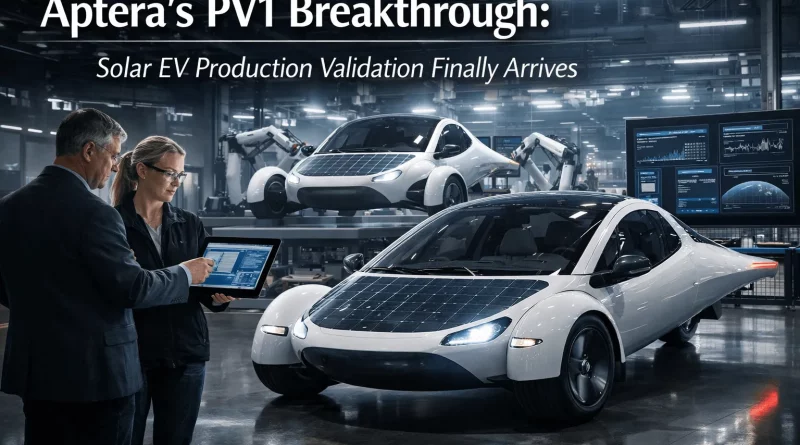
On February 17, 2026, Aptera Motors quietly wheeled their first Production Validation Vehicle (PV1) out of the validation assembly line in Carlsbad, California. Announced publicly the next day, this stark white three-wheeler isn’t a concept car or crowdfunding showpiece. It’s the first vehicle built using the actual production tooling, processes, and supply chain Aptera plans to scale to thousands of units annually.
For a company that’s dodged bankruptcy, reinvented itself twice, and collected over 40,000 pre-orders on the promise of a solar-powered electric vehicle, PV1 represents more than engineering progress. It’s proof of life the moment Aptera transitions from “cool idea” to “we might actually build and sell cars.”
With up to 40 miles per day from solar alone, 400-1,000 mile battery ranges, and a sub-$40,000 price target, Aptera isn’t chasing Tesla‘s mass market. They’re targeting efficiency-obsessed commuters, RV snowbirds, and solar enthusiasts willing to embrace a radical three-wheeled teardrop shape for unprecedented range anxiety relief.
What PV1 Actually Means (The Engineering Reality)
Production Validation Vehicles sit between prototypes and serial production. Their job is to prove manufacturing repeatability, validate production tooling, stress-test suppliers, and generate certification data for regulatory approval.
Aptera’s PV1 proves they can:
- Lay up consistent carbon fiber body panels
- Integrate 72 high-efficiency solar cells across hood/roof/sides
- Assemble in-wheel hub motors (manufactured in-house under license from Elaphe)
- Mount LG 4680 battery packs (50kWh or 120kWh)
- Achieve production tolerances (panel gaps, alignment, water sealing)
What PV1 doesn’t prove yet is crash safety (FMVSS testing starts Q3 2026), whole-vehicle solar yield (long-term exposure data), and production economics at scale.
The Aptera Value Proposition: Solar + Efficiency Math
Aptera’s not subtle about their target customer:
- Daily Driver (40 miles/day): Solar covers daily needs, reducing fuel costs to ~$400/year compared to $2,000/year for a gas car.
- Road Tripper (1,000 miles): With the 120kWh battery, users can drive a single charge for 1,000 miles, eliminating DC fast charge stops.
Key specs:
- Powertrain: BEV + 700W solar array (40mi/day free)
- Battery: 50kWh (400mi) or 120kWh (1,000mi)
- Weight: 2,100lbs (carbon fiber + aluminum)
- Seating: 2+1 side-by-side (adults + pet/small child)
- 0-60: 3.5 seconds (quad motors)
- Top Speed: 150mph
- Cargo: 8 cu ft (tight)
- Price: $35,000+ Launch Edition
The hook is “Never charge for daily driving” via solar + massive range eliminates the two biggest EV pain points.
Power Your Adventures
Aptera isn’t the only way to harness the sun. The Jackery Solar Generator 1000 provides portable power for camping or emergencies.

Aptera’s Survival Story: Three Near-Deaths, One Breakthrough
2006: Original Aptera 2e wows with 100MPG hybrid prototype
2011: Bankruptcy kills first company
2019: Crowdfunding relaunches as solar BEV
2021: 40,000+ pre-orders, $100M+ raised
2024: Production Intent (PI) bodies validate tooling
Feb 17, 2026: PV1 completes validation assembly
$130M raised via crowdfunding, strategic partners (LG Energy, Toray carbon fiber, Maxeon solar), and California ZEV grants. The burn rate is ~$2M/month, and production needs $600M+.
The Production Ramp Ahead
- Q2 2026: PV2-PV5 (crash prep, solar validation)
- Q3 2026: FMVSS crash testing
- Q4 2026: Low Volume Manufacturing (50/mo Launch Edition)
- 2027: Full production (5,000+/month)
The Carlsbad facility is 400,000 sq ft with a 50,000 unit capacity. Critical milestones to watch include PV5 completion, crash test success, and the first customer delivery in Q1 2027.
Who Buys Aptera? The Real Customer Breakdown
40,000 pre-orders aren’t Tesla fanatics. Aptera mapped their buyers:
- 40% Efficiency Obsessed: RV snowbirds, vanlifers, desert commuters. Math: 40mi/day solar = $0 commuting cost.
- 40% Performance Weirdos: Tesla owners, YouTube reviewers, supercar collectors. Math: 0-60 in 3.5s for $35k = insane bang/buck.
- 20% Green Flexers: Silicon Valley execs, climate influencers. Math: 10g CO2/mi vs 400g = ultimate status signal.
Aptera vs. Reality: The Competitive Math
| Vehicle | MPGe | Price | Solar | Status |
|---|---|---|---|---|
| Aptera | 100+ | $35k+ | YES | PV1 |
| Tesla Model 3 | 120 | $42k | NO | Mass |
| Arcimoto | 100 | $20k | NO | Low Vol |
Aptera wins on solar daily range, lightweight efficiency, and performance/price. It loses on brand recognition, three wheels, tiny cargo, and regulatory risk.
Top Up Quickly
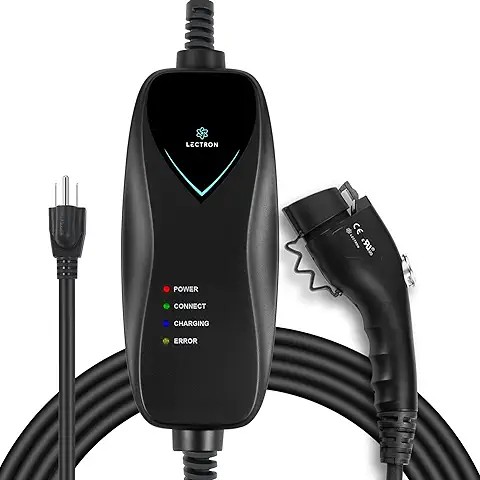
Aptera’s efficiency means you get more miles per hour of charge. Maximize that speed with the Lectron Level 1 Charger.
The Hurdles That Could Still Kill Aptera
- Funding (Biggest Threat): $600M+ needed for production.
- Crash Safety (FMVSS): No airbag required (3-wheeler exemption), but roof crush and side impact unproven.
- Solar Reality Check: 40mi/day claim is plausible in Arizona summer, but Seattle winter gets 5-10mi/day.
- Market Confusion: “Is this a car or motorcycle?” barrier.
Why Aptera Might Actually Survive
Niche mastery beats mass-market dreams. Solar daily driving is a unique value no competitor matches. Lightweight EV proves physics still matters. 40k pre-orders provide real demand validation. Aptera wins by owning “most efficient production vehicle ever” like Bugatti owns “fastest road car.”
The Team Behind PV1: Startup Grit
Chris Anthony (CEO since 2021) is a serial entrepreneur, not a Silicon Valley VC bro. The 130 employees average 8 years tenure startup gold. PV1 proves Aptera can manufacture carbon fiber teardrop bodies, integrate 72-cell solar systems, and assemble in-house manufactured hub motors.
Aptera isn’t Tesla 2.0. They’re the Koenigsegg of efficiency niche, radical, polarizing. 40,000 pre-orders prove demand exists. PV1 proves they can build it.