Trump Tariff Threats Target Mexico’s Chinese EV Backdoor: 100% Duties Loom for Vehicles with >30% Chinese Parts BYD’s Aguascalientes Bid in the Crosshairs
By InnoGazette Editorial Team | February 23, 2026
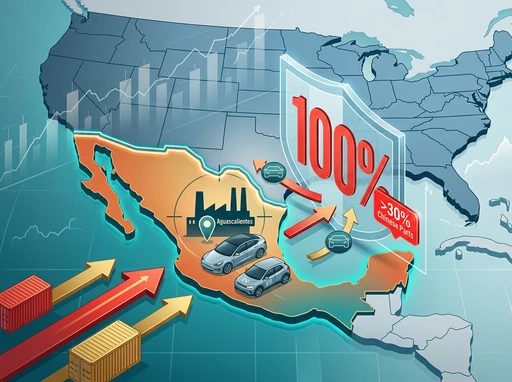
The Trump administration is sharpening a new weapon in its trade arsenal: “reciprocal tariffs” aimed at vehicles and parts coming from Mexico that rely heavily on Chinese content. According to recent trade briefings and tariff trackers, officials are drafting a policy that would impose up to 100% duties on Mexican-built vehicles with more than 30% Chinese-origin components by value, a move clearly directed at Chinese automakers such as BYD, which is bidding for the soon-to-close COMPAS plant in Aguascalientes.
No formal proclamation has been posted to the Federal Register yet, but the threat itself is already reshaping boardroom calculations in Detroit, Mexico City, and Shenzhen. For BYD, which has been positioning its Shark plug-in hybrid pickup as a Mexico-built, North America bound product, this could turn a clever tariff workaround into a costly dead end.
How the Proposed “Reciprocal Tariff” Would Work
The emerging framework, described in trade law updates and U.S. tariff trackers, is built around content thresholds and national security authority:
- Scope: Vehicles and key auto parts imported from Mexico classified under HTS Chapter 87.
- Trigger: More than 30% of the value of the vehicle or major assemblies traced to Chinese-origin inputs especially batteries, electric motors, power electronics, and certain steel/aluminum products.
- Tariff Level: Up to 100% ad valorem on the Chinese-origin portion, stacked on top of existing global and auto-specific tariffs where applicable.
- Legal basis: The administration would rely on a mix of IEEPA emergency authority and Section 232 national security powers, arguing that China s use of Mexico as a production base undermines U.S. industrial security. A recent Supreme Court ruling narrowed broad IEEPA tariff use but left room for more targeted actions tied to security-sensitive sectors.
Crucially, this framework is designed to override the practical loophole in USMCA: even if a vehicle meets the 75% regional value content requirements and qualifies for duty-free treatment, it could still be hit with a separate “reciprocal” surcharge if Chinese content exceeds 30%.
COMPAS: From Premium JV to Political Hot Potato
The COMPAS plant in Aguascalientes, a joint venture between Nissan and Mercedes-Benz, was once a showcase for premium compact manufacturing in Mexico. It produced models like the Infiniti QX50 and Mercedes-Benz GLB for global export.
But as U.S. auto tariffs intensified and demand shifted, the economics turned south. In late 2025, Nissan and Mercedes announced that the plant would be shut down by May 31, 2026, citing overcapacity, tariff headwinds, and changing product strategies.
That closure opened the door for new bidders. Reports from Reuters, Electrek, and regional business outlets indicate that BYD and Geely emerged as leading contenders to acquire the facility, alongside interest from VinFast and other Chinese or China-linked automakers. The plant s 230,000-unit annual capacity, rail connections, and experienced workforce make it a prime beachhead for any brand seeking North American scale without building from scratch.
It is not yet finalized that BYD has “won” the plant most sources still describe it as a competitive bidding situation but BYD is consistently named as a front-runner and “most aggressive” suitor.
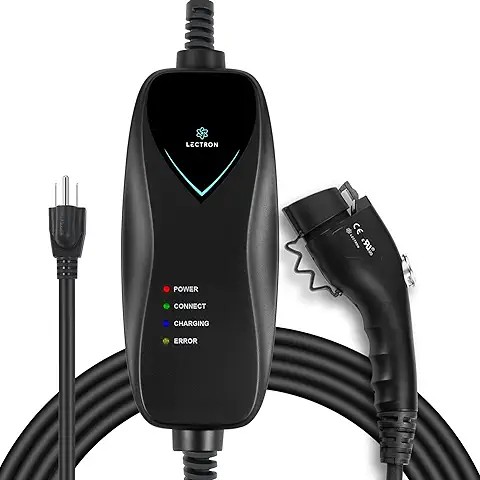
Power Your EV Anywhere
Whether you’re driving a BYD or a Ford, reliable charging is key. The Lectron Level 1 Charger is a versatile backup for any standard outlet.
BYD s Mexico Strategy: The Shark as Spearhead
BYD has already launched the Shark plug-in hybrid pickup in Mexico, positioning it as a highly capable, value-rich alternative in a market dominated by Toyota, Ford, and GM:
- Powertrain: DMO PHEV platform with a 1.5-liter turbocharged engine and dual electric motors, delivering around 429 hp and 651 Nm of combined output.
- Range: Approximately 100 km of pure electric driving and over 800 km total range, depending on cycle, thanks to a Blade LFP battery and efficient hybrid system.
- Performance: 0 100 km/h in the mid-5-second range, with robust towing capability and practical bed dimensions for mid-size truck buyers.
- Price: Local pricing translates to roughly $35,000 USD-equivalent in Mexico, making it highly competitive versus established pickups.
The strategic play is obvious: build Sharks and future BYD models in Mexico, meet USMCA regional value requirements, and then export to the U.S. and Canada with low or zero tariffs sidestepping the 100% tariffs currently imposed on Chinese-built EVs and key components.
The problem, in Washington s eyes, is that BYD would still rely heavily on Chinese-made batteries, motors, and electronics in the early years. That would almost certainly blow through a 30% Chinese content threshold, even if final assembly and much of the labor content is Mexican.
Who Gains, Who Loses If the Threat Becomes Policy?
If the reciprocal tariff policy is finalized along the lines being discussed, the winners and losers become fairly clear:
Likely winners:
- Detroit automakers (GM, Ford, Stellantis): They gain breathing room from a potentially huge new wave of low-cost Chinese-branded hybrids and EVs entering via Mexico.
- USMCA-compliant plants without Chinese content: Facilities like VW Puebla or Toyota s Mexican operations that source batteries and critical components from non-Chinese suppliers would be shielded.
Likely losers:
- Chinese OEMs using Mexico as a bridge: BYD, Geely, and others whose business models assume continued reliance on Chinese battery and motor supply could face crippling price penalties on U.S.-bound exports.
- Supply chains built around Chinese Tier 1 suppliers: Battery makers like CATL and component suppliers serving Mexico plants would suddenly find their products making finished vehicles uncompetitive in the U.S. market.
- Mexican workers and local economies: Regions betting on big-ticket Chinese FDI could see delayed deals or scaled-back production if U.S. tariff risks make export math impossible.
For U.S. consumers, the impact would likely be higher prices and fewer choices in the short to medium term, especially in the affordable hybrid and EV segments.
Protect Your Truck
Whether it’s a BYD Shark or a Ford F-150, keeping your truck clean preserves value. The Chemical Guys Arsenal Builder Kit is the ultimate detailing package.

Mexico s Tightrope: FDI vs. U.S. Pressure
Mexico finds itself in a familiar but sharper squeeze. On one hand, Chinese automakers and suppliers offer billions in investment and thousands of jobs, particularly in states like Aguascalientes, Nuevo Le n, and Guanajuato. On the other hand, the country s top trading partner and political neighbor is signaling that too much Chinese content could bring severe consequences.
Mexico has already shown a willingness to align partially with U.S. concerns, imposing tariffs of up to 50% on a range of Chinese imports in late 2025. That move was widely seen as a gesture of cooperation and a way to avoid unilateral U.S. action that might undermine USMCA.
If the U.S. reciprocal tariff threat hardens into actual policy, Mexico s likely responses include pushing Chinese automakers to localize more of their supply chains in North America, negotiating carve-outs or phased timelines, and rebalancing its industrial promotion strategy.
BYD s Options: Localize, Pivot, or Retreat?
BYD is not without moves:
- Deep Localization: It could accelerate plans to source batteries, motors, and high-value components from within North America, either via joint ventures (e.g., with CATL or local partners) or by building its own facilities in Mexico or even the U.S.
- Focus on Latin America First: BYD could proceed with Aguascalientes but prioritize exports to Latin America and domestic Mexican sales, treating the U.S. market as a second-phase target once the tariff landscape becomes clearer.
- Wait and See: Given that the tariff is still a threat, not a signed rule, BYD might delay final decisions or structure the plant acquisition with off-ramps if U.S. policy becomes too hostile.
Whatever path it chooses, the original clean narrative of build in Mexico, sell into the U.S. freely is now broken.
Big Picture: Trade War 2.0 Moves to the Auto Supply Chain
The threatened 100% reciprocal tariffs aren t just about one plant or one pickup. They signal where the next phase of U.S. China economic confrontation is headed: away from direct tariffs on Chinese exports alone, and toward policing Chinese content anywhere in the supply chain, especially in sectors seen as strategic, like EVs and batteries.
For automakers and suppliers, that means country-of-origin math becomes as important as engineering specs. For Mexico, it means every big Chinese-backed project will be weighed against the risk of provoking Washington.
For now, the reciprocal tariff remains a sword hanging over Aguascalientes, not a blow already landed. But if you re BYD, Geely, or any OEM betting on Chinese content in Mexico to crack the U.S. market, the message from Washington is unmistakable: your shortcut just turned into a minefield.