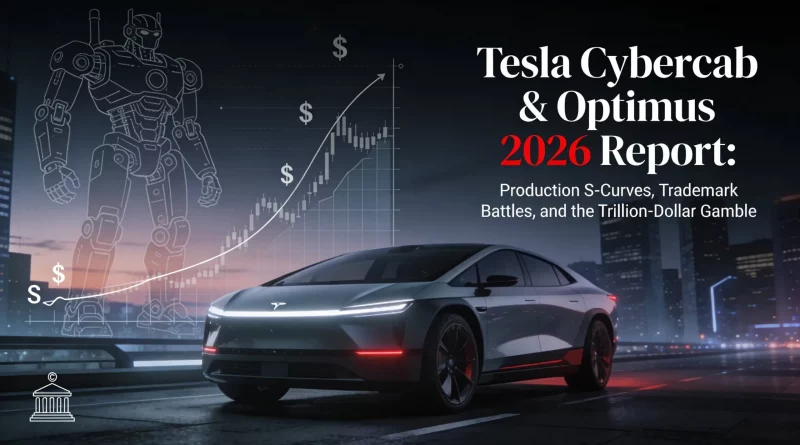
Tesla Cybercab & Optimus 2026 Report: Production S-Curves, Trademark Battles, and the Trillion-Dollar Gamble
Date: February 13, 2026
The road to a fully autonomous future is paved with engineering marvels, legal hurdles, and the stark reality of manufacturing S-curves. Tesla is currently navigating all three. Following the landmark “We, Robot” event in late 2024, the company has entered 2026 with a clear but arduous roadmap for its two most ambitious products: the dedicated Robotaxi (Cybercab) and the Optimus humanoid robot.
While the long-term promise of “democratized transportation” remains the company’s north star, the immediate reality involves navigating complex trademark disputes and managing investor expectations through an “agonizingly slow” initial production ramp. This report breaks down the state of Tesla in February 2026, separating the hype from the industrial reality of Giga Texas.
The Cybercab Naming Controversy: A Legal Deadlock
Tesla’s marketing machine has hit a bureaucratic speed bump. The “Cybercab” moniker, unveiled as the face of the company’s autonomous fleet, remains entangled in a complex trademark dispute at the USPTO.
Contrary to rumors of a blockage by a specific beverage giant, the reality is a procedural deadlock regarding distinctiveness. Tesla filed for the trademark following the October 2024 unveiling, but the application faced delays due to the generic nature of the term “cab.” On February 11, 2026, Tesla secured a critical 30-day extension to address these office actions and oppose conflicting claims.
To hedge against a total rebrand, the company has defensively filed for alternatives including “Cybercar” and “Cybervehicle” in early 2026. While these names lack the punch of “Cybercab,” they offer a safety net to ensure the vehicle can be sold and insured without infringing on existing intellectual property. For now, prototypes continue to display the Cybercab badging, but the legal department is working overtime to clear the runway before volume deliveries begin.
Production Timelines: The “Unboxed” Reality
Elon Musk has famously warned that the initial production ramp of the Cybercab would be “agonizingly slow,” a sentiment he reiterated during the Q4 2025 earnings call. This is not a failure of execution, but a feature of the S-curve associated with Tesla‘s revolutionary “Unboxed” manufacturing process.
Giga Texas Status (Feb 2026)
Earlier optimism for a “full ramp by April 2026” has been tempered by the reality of validating novel assembly techniques. The status on the ground at Giga Texas is as follows:
- H1 2026: Dedicated to Start of Production (SOP), system validation, and tooling calibration. The goal is to prove the “unboxed” concept where sub-assemblies are completed independently before a final, single-step marriage.
- H2 2026: Gradual increase in volume. The focus is on quality assurance for the sensor suite and drive units.
- 2027 Target: True volume production (aiming for 100k+ units/quarter) is now targeted for 2027.
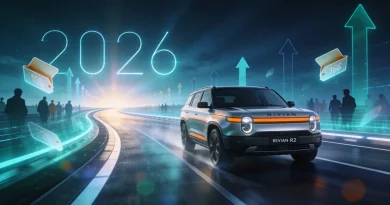
This timeline mirrors the Rivian and Cybertruck ramps, where new chassis architectures required 12-18 months to scale from pilot to mass volume. Analysts note that while the pacing is deliberate, the eventual cycle times—aiming for under 10 seconds per station—could revolutionize automotive costs.
Future-Proof Your EV Charging
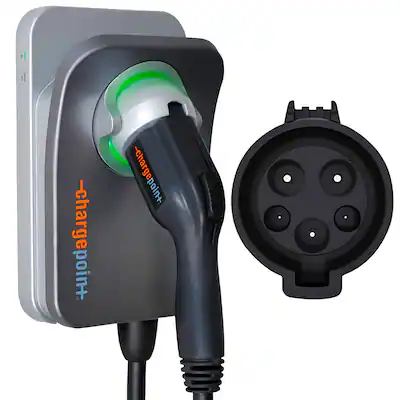
Whether you are waiting for a Cybercab or driving a Model Y today, a reliable Level 2 home charger is the backbone of EV ownership. The ChargePoint Home Flex is Wi-Fi enabled and ready for the next generation of EVs.
Optimus and the “Giga” Bottleneck
Tesla has inextricably linked the fate of the Cybercab to the Optimus humanoid robot. Both rely on the same advanced AI training clusters (Dojo) and, increasingly, shared supply chains for actuators and vision hardware.
Production of Optimus is currently in the pilot phase at a dedicated facility in Fremont, California. While initial projections hoped for “thousands per week” by now, the current reality is focused on establishing installed capacity for mass production by late 2026. Tesla aims to deploy the first 10,000 units internally—using them to assemble cars and sort battery cells—before opening sales to third-party customers in 2027.
This dual ramp creates a resource strain. Queries for “Tesla Optimus Cybercab production bottleneck 2026” have spiked, reflecting investor concerns that the humanoid project is diverting talent from the core EV business. However, Musk argues the synergy is vital: Optimus will eventually serve as the automated labor force that makes the “Unboxed” process economically viable.
Design Specs: The Wireless Future
As prototypes mature, the technical specifications of the Cybercab are crystallizing, differentiating it sharply from the Model Y and competitors from Ford or Geely.
- Battery & Efficiency: Estimates peg the battery pack at roughly 50kWh. With a targeted drag coefficient significantly lower than the Model 3, this pack size supports a 300+ mile range, optimized for high-uptime urban taxi loops.
- Wireless Charging: A key innovation is the lack of a charge port. Leveraging technology from Wiferion (acquired and integrated), the Cybercab utilizes inductive charging rated at approximately 25kW. This allows the vehicle to “snack charge” automatically between rides without human intervention.
- Interior: The cabin features a two-seat lounge configuration with no steering wheel or pedals, centered around a large infotainment display for passenger entertainment.
Crystal Clear Tech
Modern EVs like the Cybercab differ from legacy cars in one major way: screens everywhere. Keep your infotainment and instrument clusters smudge-free with the WHOOSH! Screen Cleaner Kit, the choice of tech enthusiasts.

Financials: 2025 in the Rearview
To understand the 2026 outlook, one must look at the 2025 financial baseline. Tesla closed FY2025 with total revenue flat year-over-year at approximately $97 billion. However, the profit mix shifted dramatically.
GAAP Automotive profits declined roughly 61% to ~$4 billion as aging models like the Model 3 and Y saw price cuts to maintain volume. The company was effectively buoyed by its Energy division (Megapack), which saw triple-digit growth. This financial reality explains the urgency behind the Cybercab: Tesla needs a new, high-margin growth story to justify its valuation, as the legacy auto business transitions to a lower-growth maturity phase.
Market Projections and Competitor Landscape
The stakes for the Cybercab are existential. Analysts forecast the autonomous taxi market could be worth trillions by 2030, and Tesla is betting the farm on capturing the majority share.
| Competitor | Status (2026) | Key Weakness vs. Tesla |
|---|---|---|
| Waymo | Operating in 20+ cities; highly reliable | High hardware cost ($100k+ per unit); slower scaling |
| Cruise (GM backed) | Recovering slowly from 2023 shutdowns | Reputational damage; supervised operations |
| Zoox (Rivian partner rumor) | Purpose-built vehicle; limited geo-fence | Lack of massive fleet data for edge-case training |
Analysts from Deutsche Bank and ARK Invest project that if Tesla can overcome the “slow ramp” of 2026, the Cybercab could add $3-5 billion in high-margin revenue by late 2027, eventually scaling to over $50 billion annually by 2030. Optimus, while further out, holds the potential to eclipse the automotive business entirely if it achieves the $20k price point for general labor markets.
Conclusion
2026 is set to be a “defining year” for Tesla. The transition from a pure EV manufacturer to an AI and Robotics company is messy, expensive, and legally complex. While the Cybercab’s production may be starting slowly, and its name may be contested in trademark offices, the underlying industrial machine at Giga Texas is moving with a momentum that few competitors can match. For investors and enthusiasts alike, patience will be the ultimate currency this year.
Don’t Get Stranded
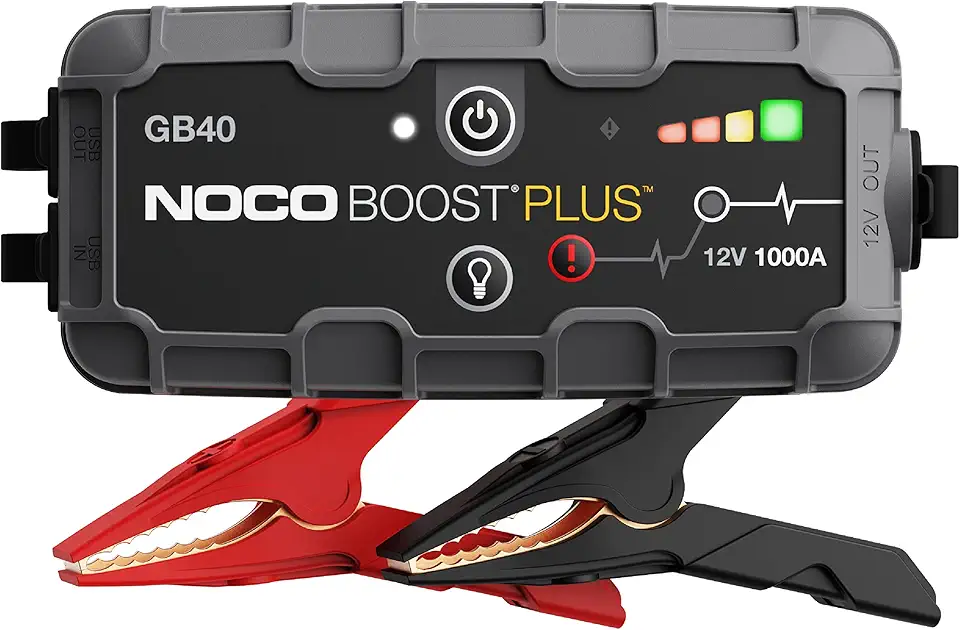
As vehicle fleets age and technology becomes more complex, a dead 12V battery can leave even the most advanced EV stranded. The NOCO Boost Plus GB40 is an essential safety tool for every glovebox.