How the EPA’s Endangerment Challenge and the Start‑Stop Credit “Cliff” Are Rewriting the Auto Industry’s 2030 Roadmap
The U.S. regulatory landscape for vehicle emissions entered a period of profound uncertainty this week. The Environmental Protection Agency, under the Trump administration, has formally initiated the process to rescind the 2009 “Endangerment Finding”—the scientific determination that classified greenhouse‑gas emissions as a threat to public health and welfare, and the legal bedrock for all federal CO₂ regulations on cars and light trucks. At the same time, automakers are facing a “regulatory cliff” regarding emissions credits for stop‑start systems, a compliance mechanism that is expiring just as the industry needed it most.
For automakers, this is not a simple “regulation rollback means life gets easier” story. It is a complex collision of past rulemakings and current political maneuvering. Many OEMs have already invested tens of billions of dollars in electrification, hybrids, and efficiency technologies based on the stringent “Multi‑Pollutant” standards finalized in 2024. The sudden policy pivot creates a long‑term planning nightmare: while Model Year 2027 vehicles are already locked in, the roadmap for 2029 through 2032 is now completely obscured by legal fog. Do they stay the course on EVs and hybrids, slow‑walk investments, or pivot again toward efficient ICE and plug‑in hybrids aimed at state‑level and foreign rules?
This article breaks down what actually changed at the EPA this week, why the start‑stop credit situation is a legacy issue rather than a new “crackdown,” and how these decisions will reshape product planning, pricing, and technology choices heading into the critical 2029–2032 cycle.
What the Endangerment Finding Is – and Why Challenging It Matters
The Endangerment Finding, finalized by the EPA in 2009, concluded that six greenhouse gases, including carbon dioxide, “threaten the public health and welfare of current and future generations.” That finding, rooted in the Clean Air Act and upheld in subsequent legal challenges, provided the legal basis for:
- Federal greenhouse‑gas emissions standards for light‑duty vehicles.
- Parallel increases in Corporate Average Fuel Economy (CAFE) targets via NHTSA, coordinated with EPA rules.
- Enforcement mechanisms that allowed the federal government to require automakers to reduce fleet‑average CO₂ per mile over time.
In practice, it is the cornerstone that allowed the EPA to assert jurisdiction over CO₂ as a pollutant. By moving to rescind that finding, the current agency is arguing that the scientific record no longer supports the conclusion that vehicle GHGs meet the statutory threshold of “endangerment.”
However, this does not erase current rules overnight. Under the Administrative Procedure Act, the 2024 finalized standards for Model Years 2027–2032 remain binding law until they are specifically repealed or revised through a new rulemaking process—a mechanism that takes time and is subject to intense litigation. The rescission of the Finding makes those rules legally vulnerable, but it does not technically void them this week.
Immediate implications for federal standards
Policy and legal analysts note several near‑term consequences of this bureaucratic warfare:
- Legal Limbo for 2027–2032: The existing federal GHG standards are now under a cloud of uncertainty. While they remain on the books, enforcement is in question, and environmental groups are already preparing to seek court injunctions to preserve the Biden‑era rules.
- Frozen Future Rulemaking: Any work on standards for Model Year 2033 and beyond is effectively halted until the legal status of the Endangerment Finding is resolved by the Supreme Court, which could take years.
- The “Shadow” Plan: Automakers must now run two parallel compliance strategies: one that assumes the 2024 rules survive in court, and one that assumes they are vacated.
For automakers, that means the federal “ladder” of ever‑tighter CO₂ targets is no longer predictable. Many had designed product portfolios around hitting specific gram‑per‑mile targets in 2030. Those targets are now politically—and potentially legally—up in the air.
Why this is not a simple “win” for automakers
On the surface, attacking the legal basis of federal standards sounds like relief for legacy OEMs, especially those with heavier trucks and SUVs. But the real picture is far more complex and hazardous.
Automakers already spent the money
Ford, GM, Stellantis, Toyota, Hyundai–Kia, and others have already committed tens of billions of dollars to EV programs and battery plants based on the assumption that U.S. and EU regulations would steadily tighten. Reversing the U.S. legal framework in 2026 doesn’t refund that capital expenditure; it simply creates a risk of “stranded assets” if the market for those EVs doesn’t materialize without regulatory pressure.
State‑level rules don’t go away
States like California and those following its standards (the “Section 177” states) continue to pursue aggressive zero‑emission vehicle and fleet‑average requirements. Unless the EPA also successfully revokes California’s Clean Air Act waiver—a separate and equally litigious battle—automakers must still comply in those markets or risk being shut out of massive coastal economies.
Global regulations still tighten
The EU’s fleet targets remain in force, and Europe is still planning to effectively phase out new ICE car sales in the next decade. China likewise continues to push New Energy Vehicle (NEV) quotas. OEMs with global platforms can’t simply ignore foreign rules because U.S. domestic policy has shifted.
Investor pressure remains
Major automakers have made public decarbonization pledges. Rolling back electrification plans to chase near‑term profit under a looser U.S. regime risks reputational damage and higher capital costs from institutional investors who view the transition to electric as inevitable, regardless of current Washington politics.
The Start‑Stop Credit “Cliff”: A Legacy of the 2024 Rules
In parallel with the Endangerment move, automakers are grappling with a severe tightening of compliance math—not because of a new Trump-era “crackdown,” but because of a scheduled expiration they hoped the new administration would fix.
For over a decade, automakers relied on “off-cycle” credits for technologies like stop-start systems (which shut off the engine at idle). These credits allowed OEMs to claim CO₂ reductions that didn’t always show up on the standard test cycle. However, the Biden EPA’s March 2024 final rule determined that stop-start was now a mature, standard technology and scheduled these “menu credits” to sunset for Model Year 2027 and beyond.
The current situation is not that the EPA is actively removing them now, but rather that the new administration has not moved to reinstate or replace them. This creates a “regulatory cliff”:
- The Compliance Gap: Without these easy credits, the stringency of the MY 2027+ targets effectively increases.
- No Easy Way Out: If the new EPA does not intervene to restore these flexibilities, automakers cannot simply slap a mild-hybrid system on a V6 engine and claim compliance credit. They are forced to rely on real tailpipe reductions—meaning more full hybrids (HEVs) and PHEVs.
This lack of action to restore the credits puts automakers in a bind: they are facing the strict 2024-defined targets without the 2024-era loopholes, all while the overarching legal framework is under attack.
Protect Your Investment: Essential Maintenance for Modern Engines
With regulations shifting and owners keeping vehicles longer, maintaining your 12V system is critical—especially for vehicles with start-stop technology.

How Automakers Are Likely to Respond
With the federal CO₂ ladder legally threatened but technically binding, and stop-start credits evaporating, automakers have to reassess their plans. However, because product development cycles are long, this doesn’t change Model Year 2027—those cars are already tooled and ready for production later this year. The real shift will happen in the 2029–2032 window.
Rethinking ICE and Mild-Hybrid Programs
Many OEMs had planned to transition pure ICE vehicles to hybrids. The loss of menu credits actually accelerates this need.
- In Europe, regulations push cleaner combustion.
- In the U.S., without the “paper credits” for stop-start, automakers must implement systems that deliver actual dyno-testable fuel economy gains. This likely means a shift from basic 12V stop-start to more robust 48V mild-hybrid or full-hybrid architectures that can move the needle on the EPA test cycle.
Hybrids and PHEVs: The New “Safe Bet”
The policy combination makes hybrids and plug‑in hybrids (PHEVs) the most rational bridge technology for the late 2020s:
- They provide substantial real‑world CO₂ cuts that don’t rely on “off-cycle” credit menus.
- They help OEMs hedge: if the Endangerment Finding is upheld and rules stay strict, hybrids help comply. If the rules are vacated, hybrids are still profitable and popular with consumers.
- They appeal to buyers wary of EV charging infrastructure but wanting insulation from fuel‑price volatility.
Optimizing the PHEV Experience
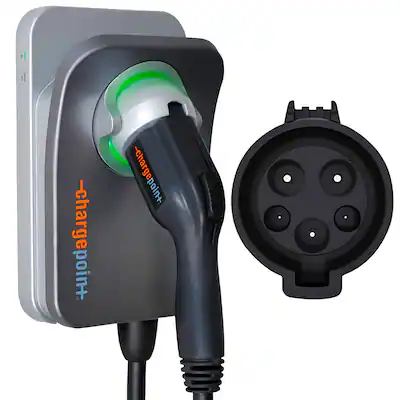
As Plug-in Hybrids become the industry’s “safe bet,” a reliable home charger is essential to maximize electric-only driving range.
BEVs: From Volume Mandate to Strategic Flagships
The legal uncertainty removes the “existential panic” to convert 100% of the fleet to BEV by 2032.
- In North America, BEVs will likely be refocused on premium segments and specific use-cases where they offer superior performance (e.g., luxury SUVs, performance sedans).
- The likely shift is away from forcing BEVs into every budget segment as a compliance necessity, and toward treating them as high-margin products, while allowing hybrids to carry the volume load.
Fragmented Rules: Federal vs. States vs. Rest of World
One reason automakers can’t simply “slow‑roll” everything is regulatory fragmentation.
California and the ZEV States
California and the “Section 177” states are legally decoupled from the federal rollback unless their specific waiver is revoked. They still demand a high share of zero-emission vehicles.
- Automakers must maintain robust BEV offerings to compete in New York, California, and Massachusetts.
- They cannot fully pivot back to pure ICE even if federal rules vanish, or they risk abandoning 30-40% of the U.S. market.
Europe and China
In Europe and China, the trajectory remains fixed toward electrification. Global OEMs face a “multi-track” planning nightmare:
- Track A: A hybrid-heavy mix for the “Federal U.S.” (assuming looser rules).
- Track B: A BEV-heavy mix for California, Europe, and China.
This fragmentation adds immense complexity and cost, erasing the efficiency of global “One Ford” or “One Toyota” strategies.
Market and Consumer Impacts: Hybrids Up, Used Values Rising
The combined effect of regulatory uncertainty and the cooling of the EV “hype cycle” is already reshaping consumer behavior in early 2026:
- EV Stagnation: EV registrations in the U.S. are flattening as federal incentives face legislative risk under the current Congress.
- Hybrid Resilience: Used 2022–2024 hybrids are trading at record prices. Buyers are looking for fuel economy without the infrastructure risk, and with the regulatory future unclear, a hybrid feels like the safest 7-year bet.
- The Value Gap: This environment favors hybrid owners in terms of resale value, while introducing significant residual‑value risk for BEVs bought under earlier, more optimistic policy assumptions regarding charging network build-outs.
Strategic Scenarios for 2029–2032
Putting it all together, three strategic paths emerge for automakers navigating this specific moment in Feb 2026:
1. The “Regret Minimization” Hybrid Path
- Focus: Hybrids and PHEVs in mainstream segments; BEVs only where profitable.
- Rationale: Hedge regulatory risk. If the Trump EPA wins, you have profitable cars. If the Biden rules survive in court, hybrids get you 80% of the way to compliance.
- Likely Adopters: Toyota, Stellantis, Ford.
2. The Global BEV Commit
- Focus: Continue heavy BEV investment to stay competitive in China and Europe.
- Rationale: Assume U.S. policy is a temporary blip; avoid falling behind Chinese technology curves.
- Likely Adopters: Tesla, German premium brands, Hyundai–Kia (due to global export focus).
3. The ICE Extension Gamble
- Focus: Extend life of pure ICE trucks/SUVs, hoping the Endangerment rescission holds up in the Supreme Court.
- Rationale: Maximize short‑term profit.
- Risk: Extreme vulnerability if the courts uphold the 2024 rules or if California wins its waiver battle. Note that brands like Rivian are excluded from this path by definition.
What to Watch Next
For an analyst tracking this industry, the next six months are critical:
- Litigation Filings: Watch the environmental NGOs and California AG’s office filing for injunctions. This will determine if the 2027 rules stay in force during the legal fight.
- Capital Spending Guidance: Listen to earnings calls. If OEMs announce delays in battery plant construction, they are betting on the rollback. If they proceed, they are fearing the California mandate.
- The “Shadow” Rules: Watch to see if the Trump EPA proposes a new, looser set of rules to replace the 2024 standards, or if they simply rely on the Endangerment rescission to blow up the foundation.
For now, the key takeaway is that U.S. federal rules have entered a state of legal Schrödinger’s cat: they are both alive (on the books) and dead (politically targeted) at the same time. For automakers, the only rational response is to bet on the technology that works in both realities: the hybrid.