
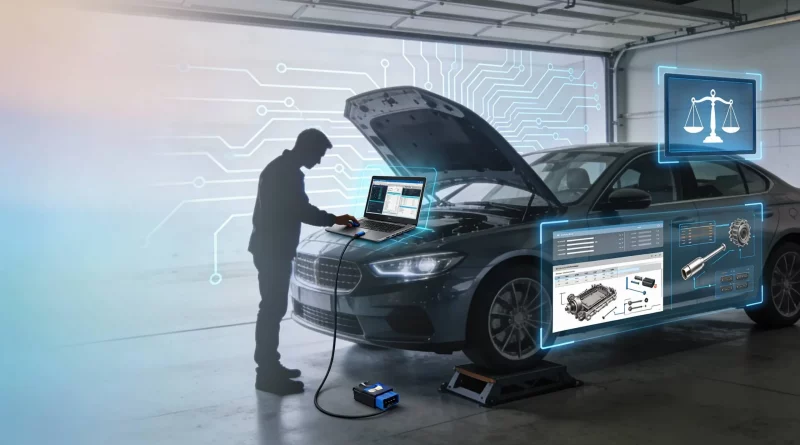
The “Right to Repair” DIY Renaissance: How to Hack Your Maintenance in 2026
TL;DR: The DIY Rebellion
- The Problem: Dealer labor rates averaged $245/hr in Jan 2026. Simple software resets are costing owners hundreds.
- The Solution: Professional-grade OBDII scanners are now affordable, allowing you to cycle ABS pumps and reset battery sensors.
- The Law: Expanded Right-to-Repair laws passed in late 2025 force OEMs to share ADAS calibration data with consumers.
- The Hack: You can now calibrate cameras and radar units in your driveway using printed targets, saving $500+ per visit.
In 2026, owning a modern car feels less like owning a machine and more like licensing software. With the rise of the Software-Defined Vehicle (SDV), dealerships have attempted to gatekeep maintenance behind proprietary firewalls. Want to change your own battery? That requires a “BMS Reset” ($150). Want to replace a cracked side mirror? That requires “Camera Calibration” ($400).
However, a “DIY Rebellion” is currently trending across automotive forums and YouTube. Driven by inflating insurance premiums and exorbitant labor rates, drivers are taking control back. Thanks to new Right-to-Repair legislation enacted in 2025, the tools previously reserved for the dealership service bay are now available to you. Here is how to join the renaissance and stop paying the “Software Tax.”
Table of Contents
The Weapon of Choice: Bi-Directional Scanners
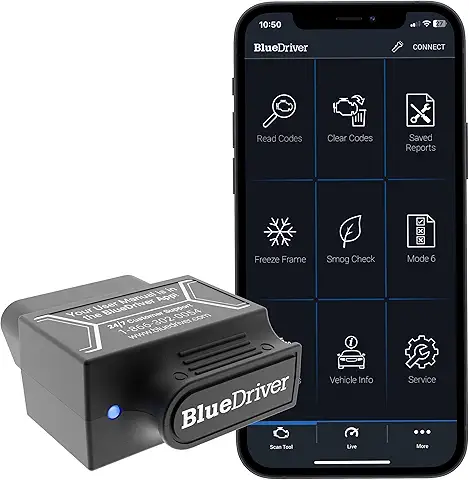
In the past, a code reader just told you why the Check Engine Light was on. In 2026, you need a “Bi-Directional” scanner. This tool doesn’t just read data; it sends commands to the car.
For example, if you change your own brake pads on a 2026 Honda Civic, you cannot physically push the caliper piston back because the electronic parking brake holds it. A dealer would charge you to “Enter Service Mode.” With a bi-directional scanner, you press a button on your phone, the car retracts the piston electronically, and you change the pads for the cost of parts.
The $20 Hack: DIY Lane-Keep Calibration
The biggest scam in 2026 is “ADAS Calibration.” If you replace a windshield or a bumper sensor, the car disables Lane Keep Assist until it is “Calibrated.” Dealers charge upwards of $600 for this.
The Fix: Right-to-Repair laws now mandate that manufacturers publish the target dimensions. Savvy DIYers are printing these targets at FedEx Office for $20, sticking them to a board, and using their bi-directional scanner to tell the car “Start Learning.” As long as your measurements are precise (using a laser measure), you can recalibrate your own radar and cameras in your driveway.
The “BMS” Scam: Coding Your Own Battery
Modern cars from brands like BMW and Porsche track the age of the 12V battery. As the battery ages, the alternator charges it more aggressively. If you put a new battery in but don’t tell the computer, the alternator will overcharge the new battery and kill it in 6 months.
Dealers charge 1 hour of labor ($250) just to click “Register Battery.” With a tool like the Autel MaxiCheck or even mobile apps like BimmerCode, you can do this yourself in 30 seconds. This is the single easiest way to save money on European car maintenance.
Is This Legal? (Warranty Myths)
The Magnuson-Moss Warranty Act protects you. A manufacturer cannot void your warranty simply because you performed your own maintenance or used aftermarket parts, unless they can prove your specific action caused the failure. Calibrating your own sensors is legal. Resetting your own service lights is legal. Don’t let the service advisor bully you into thinking otherwise.