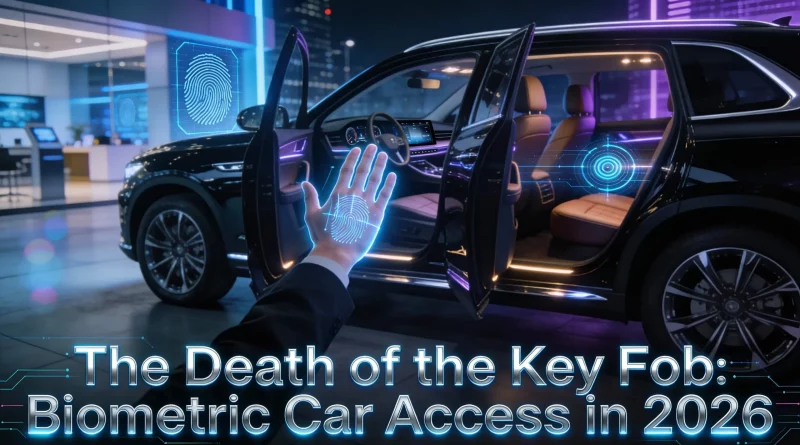
The Death of the Key Fob: Biometric Car Access in 2026
Your Face is the Key
- The Trend: Phone-as-a-Key (PaaK) was step one. Face-as-a-Key is step two.
- The Tech: Near-Infrared (NIR) cameras in the B-pillar work in total darkness and cannot be fooled by photos.
- The Leaders: Genesis (GV60/GV70) and Cadillac (Optiq/Lyriq) are pioneering this standard.
- Security: Biometrics prevent “Relay Attacks” that plague traditional key fobs.
For over 100 years, you needed a metal object to start a car. Then came the fob, then the phone app. In 2026, the era of carrying anything at all is ending. Biometric access—using your face, fingerprint, or iris to unlock and start a vehicle—has moved from concept cars to dealer lots.
Driven by rising vehicle thefts (specifically relay attacks on key fobs) and a consumer desire for “frictionless” living, automakers are integrating enterprise-grade security sensors into door pillars. But is it safe? And what happens if the battery dies? Here is the state of biometric car access in 2026.
Table of Contents
How It Works: NIR vs. Optical
Early attempts at this tech failed because they used standard optical cameras that struggled in low light. The 2026 standard is Near-Infrared (NIR) combined with 3D Depth Sensing (Time of Flight).
The Entry Process: As you walk up to the driver’s door, a sensor in the B-pillar activates. It projects thousands of invisible infrared dots onto your face to map its depth. This ensures a thief cannot hold up a high-res photo of you to unlock the car. It works in pitch black, rain, or while wearing sunglasses (though some mirrored lenses can interfere).
Which 2026 Models Have It?
While still a premium feature, it is trickling down:
- Genesis GV60 / GV70: The system is called “Face Connect.” It unlocks the door, and a fingerprint reader on the console starts the engine. No key required.
- Mercedes-Benz E-Class: Uses biometric authentication to log you into the MBUX system, loading your calendar, seat position, and payment info for toll roads automatically.
- Cadillac Optiq: The newest entry, offering a seamless walk-up experience that feels like FaceID on an iPhone. Also available on the Lyriq via an OTA update for 2025/2026 models equipped with the sensor package.
Can It Be Hacked?
Nothing is unhackable, but biometrics are significantly harder to bypass than Radio Frequency (RF) signals. The “Relay Attack”—where thieves amplify your key fob signal from inside your house to steal your car from the driveway—is impossible with biometrics. You physically have to be there.
However, the vulnerability shifts to the software. If the car’s OS is compromised, the authentication loop could be bypassed. This is why OTA security updates are critical and why you should enable 2-Factor Authentication on your car’s mobile app.