2026 New Car Debuts: A Framework for Accurate Launch Coverage
The ‘Debut Cycle’ for new cars in 2026 has become a year-round event. Gone are the days when all major reveals happened at the Detroit or Geneva auto shows. Today, a 2026 model might debut on a Tuesday via a social media livestream, leaving buyers and journalists scrambling for facts. In this 700-word guide, we provide a formal framework for navigating 2026 car debuts, ensuring you can separate marketing ‘smoke and mirrors’ from the actual production vehicle that will sit in your driveway.
The ‘Model Year’ Trap: Calendar vs. Reality
One of the most confusing aspects of 2026 car launches is the Model Year (MY) vs. Calendar Year (CY) distinction. Automotive manufacturers often reveal a ‘2027’ model in early 2026. To the buyer, this matters for resale value and software longevity. A car launched as a ‘Late 2026’ model typically includes the most recent ‘Zonal Architecture’ and J3400 charging hardware, whereas an ‘Early 2026’ model might still be using legacy parts from the previous production run.
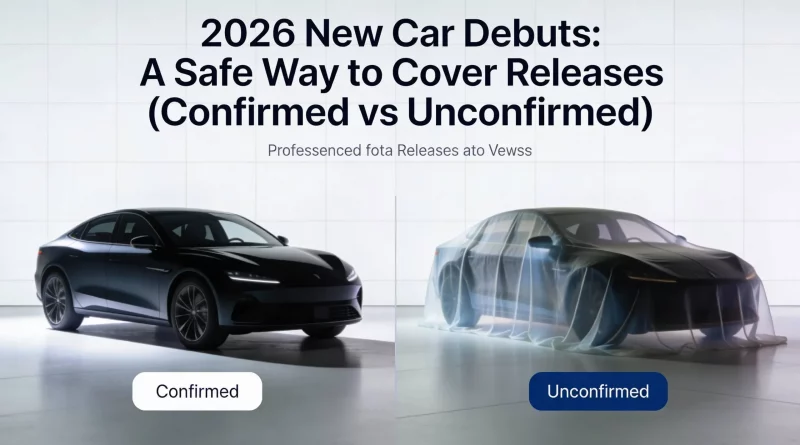
The Confirmed vs. Concept Hierarchy
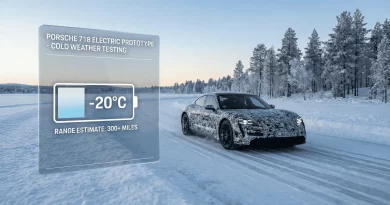
In 2026, the line between a ‘Concept’ and a ‘Production Debut’ has blurred. Many manufacturers show ‘near-production’ vehicles that lack side mirrors or have unrealistic 24-inch wheels. To identify a Production-Ready Debut, look for ‘Legal Requirements’: functional windshield wipers, DOT-approved lighting, and a visible VIN plate. If a debut doesn’t feature these, it is a concept. Furthermore, pay attention to the Specification Disclosure. A true debut will include exact figures for battery capacity (kWh), charging speed (kW), and cargo volume. If the manufacturer uses vague terms like ‘targeted range of over 300 miles’ or ‘blistering acceleration,’ the car is likely still in the final stages of validation and those numbers may change before launch.
✨ New Car Must-Haves
- Protect Your Interior: Custom-Fit Floor Liners (WeatherTech/Husky)
- Prevent Theft: Faraday Key Fob Signal Blockers
Verifying the Source: The 2026 Media Protocol
Where you get your information matters. In 2026, ‘re-blogged’ news often strips away the most important technical nuances. To stay accurate, always go to the Official Media Newsroom of the automaker. These portals provide the high-resolution press kits and technical spec sheets that aren’t available on social media. Additionally, look for ‘Embargoed Coverage’ from reputable outlets. If five major sites all publish a deep-dive review at the exact same minute, it means the manufacturer allowed them to test the car under a non-disclosure agreement. This is a strong signal that the vehicle is physically real and ready for market. Avoid ‘leak’ sites that don’t provide a link to the original source or a high-res photo gallery.
The Launch Checklist for 2026 Buyers
If you see a car debut that you love, don’t rush to place a ‘Reservation Fee.’ In 2026, many of these fees are non-refundable ‘interest indicators.’ Instead, follow this protocol: 1. Confirm Charging Standard: Does it have a native J3400 port? 2. Software Architecture: Is it built on a Zonal platform that supports V2H? 3. The TCO Disclosure: Did they announce a subscription model for safety features? 4. Competitive Cross-Shop: Use our 2026 EV Buying Guide to see how the new debut stacks up against established 2025 models. By following this framework, you ensure that the excitement of a new car debut doesn’t lead to a multi-year financial mistake.